Hambidge Center Historic District

Why it's listed
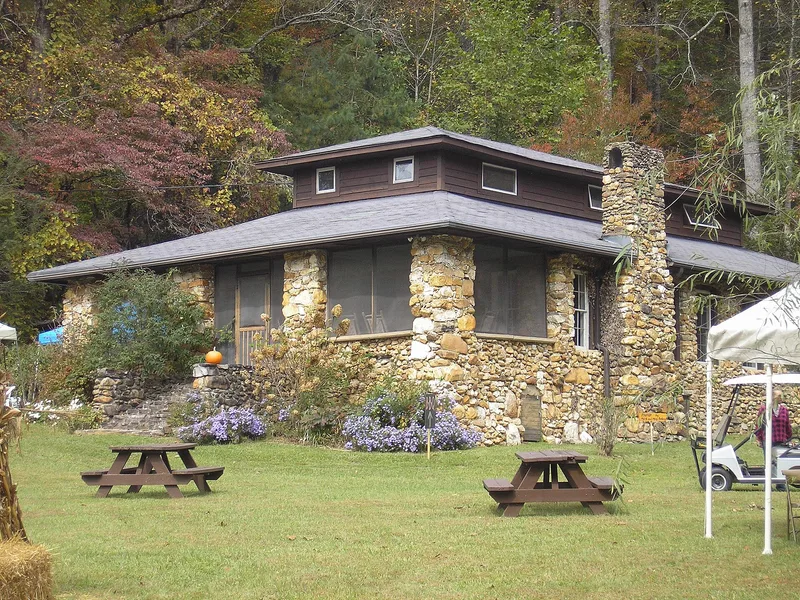
Hambidge Center Historic District occupies a creek valley and forested hillsides near Dillard, in the north Georgia mountains. Its buildings include an 1830 Hopper log cabin, 1890s log lodges, a 1920 fieldstone farmhouse built by Lex Darnell, a 1936 gristmill, a 1940s dairy complex and weaving sheds, along with ruins of an unfinished 1914 lodge. The land was among the first settled in Rabun County, then briefly served a hunting club, and later became Judge W. Carroll Latimer's farm. In 1935 Mary Hambidge bought it and revived mountain weaving, forming the Jay Hambidge Art Foundation in 1944. Her weavers won awards and showed work at major museums. Foxfire magazine was conceived here in the 1960s. The district was listed for its settlement and agricultural history, its association with these people, and its vernacular architecture built from local logs and stone. The center still hosts artists, writers and scholars.
Machine-generated summary. This summary was generated by a language model from the official nomination document and has not been reviewed line by line by an editor. It may contain errors. Check the source document before relying on any detail. Source: nomination document (PDF) · catalog entry. Generated October 2026 (model claude-sonnet-5-5, prompt v1.0-2026-10-29).
| Period of significance | 1830s-1940s |
|---|---|
| Styles | Vernacular log, stone masonry and rubble concrete construction |
| Areas of significance | Landscape Architecture, Art, Exploration/Settlement, Architecture, Social History, Agriculture |
| Acreage | 660 |
| Boundary source | NPS cultural-resource GIS polygon |
| Full listing page | Hambidge Center Historic District (property record) |
What listing means for this property
This is a historic district. Buildings within its boundary are either contributing (they add to the district's significance) or non-contributing. Owners of contributing income-producing buildings can claim the 20% federal rehabilitation tax credit; homeowners should look at state credits. National Register districts impose no design review by themselves; a local historic district ordinance, if one exists, does (the difference explained).
General information, not legal or tax advice. Rules change; confirm with your State Historic Preservation Office or a qualified adviser.