Greenville Street-LaGrange Street Historic District

Why it's listed
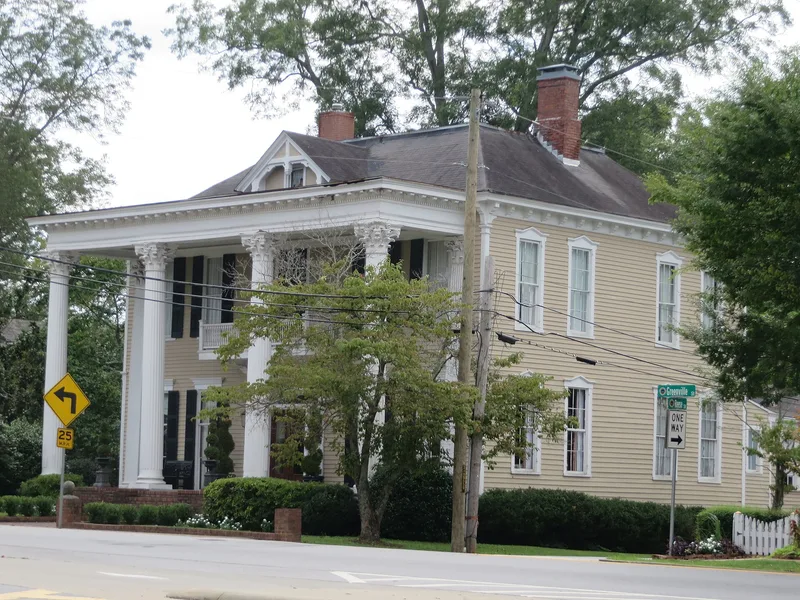
Just south of downtown Newnan, Georgia, this residential neighborhood of roughly 50 acres grew up along Greenville and LaGrange Streets, the two main roads leading south out of the city. Early settler families, including the Buchanans and Nimmons, built large houses here soon after Newnan's incorporation in 1828. As early twentieth-century landholdings were subdivided, Nimmons, Reese and Buchanan Streets were created and filled with bungalows and cottages. The houses range from antebellum Greek Revival to Queen Anne, Neoclassical, Tudor and Craftsman designs, mostly wood-framed, with some brick. Work by Atlanta architect Leila Ross Wilburn, local architect David Cuttino, Jr., and the R. D. Cole Company's woodwork appears among them. Yards and mature street trees give the area a park-like character. Buena Vista at 87 LaGrange Street served as Confederate headquarters during the July 1864 Battle of Brown's Mill. The district was recognized for its planning history, architecture, landscape, settlement, military and local history.
Machine-generated summary. This summary was generated by a language model from the official nomination document and has not been reviewed line by line by an editor. It may contain errors. Check the source document before relying on any detail. Source: nomination document (PDF) · catalog entry. Generated October 2026 (model claude-sonnet-5-5, prompt v1.0-2026-10-29).
| Period of significance | 1840s - early twentieth century |
|---|---|
| Styles | Greek Revival, Victorian Gothic, Queen Anne, Neoclassical, Colonial Revival, Tudor, Craftsman |
| Areas of significance | Community Planning and Development, Exploration/Settlement, Architecture, Social History |
| Acreage | 50 |
| Boundary source | NPS cultural-resource GIS polygon |
| Full listing page | Greenville Street-LaGrange Street Historic District (property record) |
What listing means for this property
This is a historic district. Buildings within its boundary are either contributing (they add to the district's significance) or non-contributing. Owners of contributing income-producing buildings can claim the 20% federal rehabilitation tax credit; homeowners should look at state credits. National Register districts impose no design review by themselves; a local historic district ordinance, if one exists, does (the difference explained).
General information, not legal or tax advice. Rules change; confirm with your State Historic Preservation Office or a qualified adviser.