Green, Mitchell J., Plantation

Why it's listed
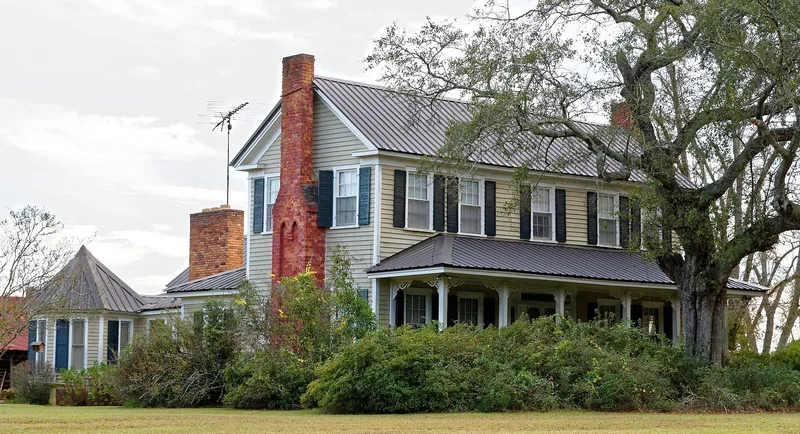
Mitchell J. Green began farming this land near Claxton in the late 1860s after returning from Civil War service. The family first lived in a two-room log cabin built in 1868, then built a two-story Plantation Plain house in 1878. That house has a central stair hall, two rooms on each side, Victorian porch woodwork, and original pine floors, mantels and hardware. Around it stand a commissary, smokehouse, syrup house, log corn cribs, a barn, a windmill, tenant houses and a tobacco barn on about 433 acres. Together they show how a self-sufficient plantation operated after the Civil War, with sheep, corn, oats, some cotton, molasses and cured meat produced for the family and seven tenant families. Green also served as postmaster of the community of Green from 1882 to 1904 and held several county offices. The plantation has stayed in the Green family, and the grouping is notable for how complete and well preserved it remains.
Machine-generated summary. This summary was generated by a language model from the official nomination document and has not been reviewed line by line by an editor. It may contain errors. Check the source document before relying on any detail. Source: nomination document (PDF) · catalog entry. Generated October 2026 (model claude-sonnet-5-5, prompt v1.0-2026-10-29).
| Styles | Plantation Plain |
|---|---|
| Areas of significance | Architecture, Agriculture |
| Acreage | 433 |
| Boundary source | NPS cultural-resource GIS polygon |
| Full listing page | Green, Mitchell J., Plantation (property record) |
What listing means for this property
This is a historic district. Buildings within its boundary are either contributing (they add to the district's significance) or non-contributing. Owners of contributing income-producing buildings can claim the 20% federal rehabilitation tax credit; homeowners should look at state credits. National Register districts impose no design review by themselves; a local historic district ordinance, if one exists, does (the difference explained).
General information, not legal or tax advice. Rules change; confirm with your State Historic Preservation Office or a qualified adviser.