Green Grove Church, School, and Cemetery

The National Park Service has not published a boundary polygon for this district; the map shows the listed properties inside it and the district's reference point.
Why it's listed
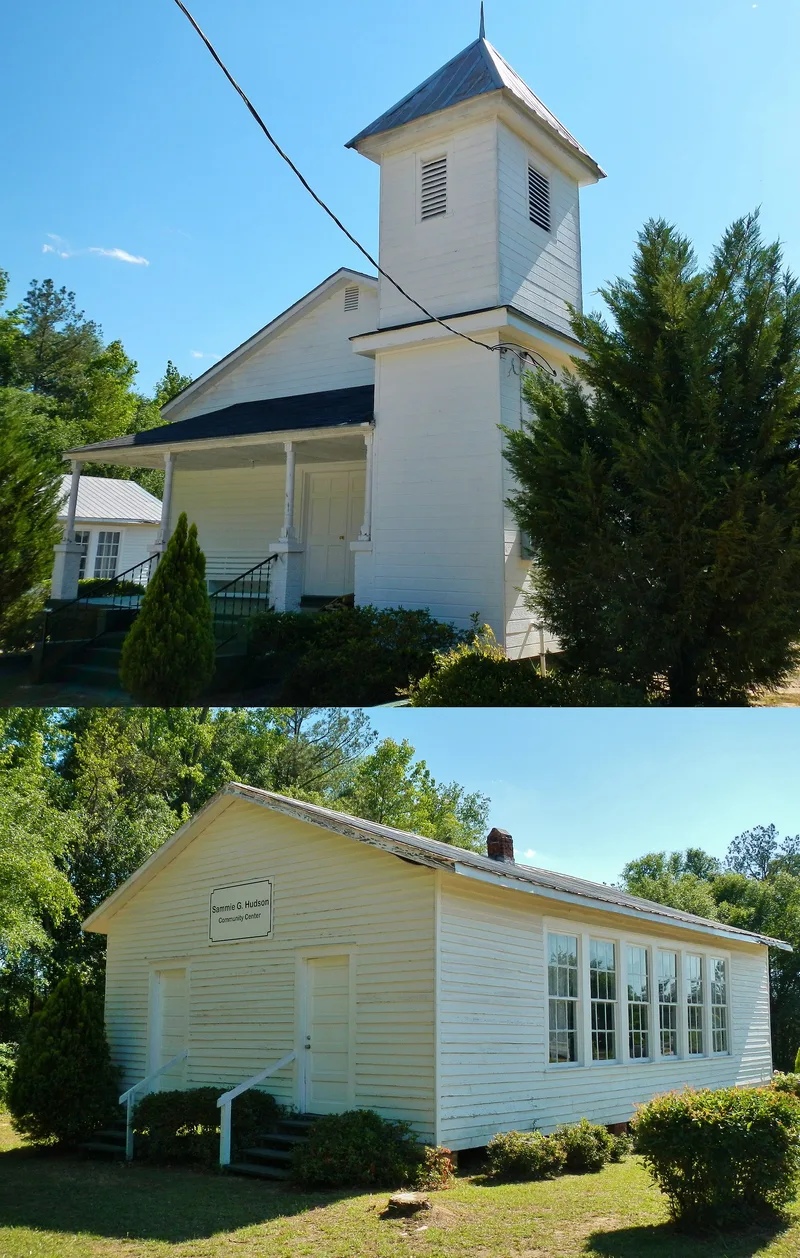
Green Grove Church, School, and Cemetery is a small rural complex southwest of Lumpkin in Stewart County, Georgia. It includes a one-story frame church with a corner bell tower, completed in 1927 after earlier churches were lost to a 1919 tornado and a 1924 fire. A one-room frame school stands beside it, along with a cemetery begun in the 1920s. The congregation, organized in 1886, bought a closed white elementary school from the Wesley Chapel area in 1936, took it apart, hauled it four miles by wagon and rebuilt it for the 1937-1938 term. Before that, classes had been held inside the church. The school served Black children from a wide farming area until it closed in 1958. Both buildings keep most of their original finishes, floors, walls and furnishings. The complex is recognized for its architecture and for its role in the educational, African American and religious history of the community.
Machine-generated summary. This summary was generated by a language model from the official nomination document and has not been reviewed line by line by an editor. It may contain errors. Check the source document before relying on any detail. Source: nomination document (PDF) · catalog entry. Generated October 2026 (model claude-sonnet-5-5, prompt v1.0-2026-10-29).
| Period of significance | 1927-1937 |
|---|---|
| Styles | No style |
| Areas of significance | Architecture, Education, Black, Religion |
| Acreage | 1 |
| Boundary source | not published |
| Full listing page | Green Grove Church, School, and Cemetery (property record) |
What listing means for this property
This is a historic district. Buildings within its boundary are either contributing (they add to the district's significance) or non-contributing. Owners of contributing income-producing buildings can claim the 20% federal rehabilitation tax credit; homeowners should look at state credits. National Register districts impose no design review by themselves; a local historic district ordinance, if one exists, does (the difference explained).
General information, not legal or tax advice. Rules change; confirm with your State Historic Preservation Office or a qualified adviser.