Gordon Avenue Historic District

Why it's listed
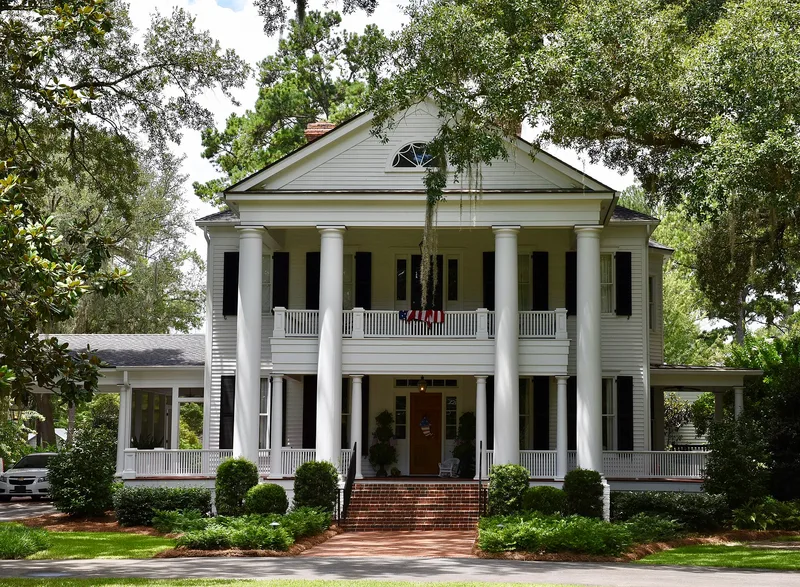
Five large single-family houses line the west side of Gordon Avenue in southern Thomasville, Georgia, on spacious lots with lawns, pine and oak trees, sidewalks and fences. Built between about 1890 and the early 1930s, the wood-framed one-and-a-half and two-story dwellings include two Neoclassical houses with monumental Doric porticos, a large late-Victorian house with a conical-roofed tower and bracketed porch, and two Eclectic houses with Neoclassical and Colonial Revival details. The street, formerly called Wyche Street, was subdivided by the heirs of S. Alex Smith and developed gradually, showing how suburban growth occurred along major roads leading out of town. It was once a favored route for carriages and bicycles. The district is also tied to local history through the homes of a dentist, attorneys, a legislator and a dry goods merchant. Its informal landscaping and level, pine-covered terrain give it a distinctly south Georgia character.
Machine-generated summary. This summary was generated by a language model from the official nomination document and has not been reviewed line by line by an editor. It may contain errors. Check the source document before relying on any detail. Source: nomination document (PDF) · catalog entry. Generated October 2026 (model claude-sonnet-5-5, prompt v1.0-2026-10-29).
| Period of significance | 1890-1930 |
|---|---|
| Styles | Late-Victorian, Neoclassical, Colonial Revival and Eclectic |
| Areas of significance | Community Planning and Development, Landscape Architecture, Architecture, Social History |
| Acreage | 24 |
| Boundary source | NPS cultural-resource GIS polygon |
| Full listing page | Gordon Avenue Historic District (property record) |
What listing means for this property
This is a historic district. Buildings within its boundary are either contributing (they add to the district's significance) or non-contributing. Owners of contributing income-producing buildings can claim the 20% federal rehabilitation tax credit; homeowners should look at state credits. National Register districts impose no design review by themselves; a local historic district ordinance, if one exists, does (the difference explained).
General information, not legal or tax advice. Rules change; confirm with your State Historic Preservation Office or a qualified adviser.