Glen-Ella Springs Hotel

Why it's listed
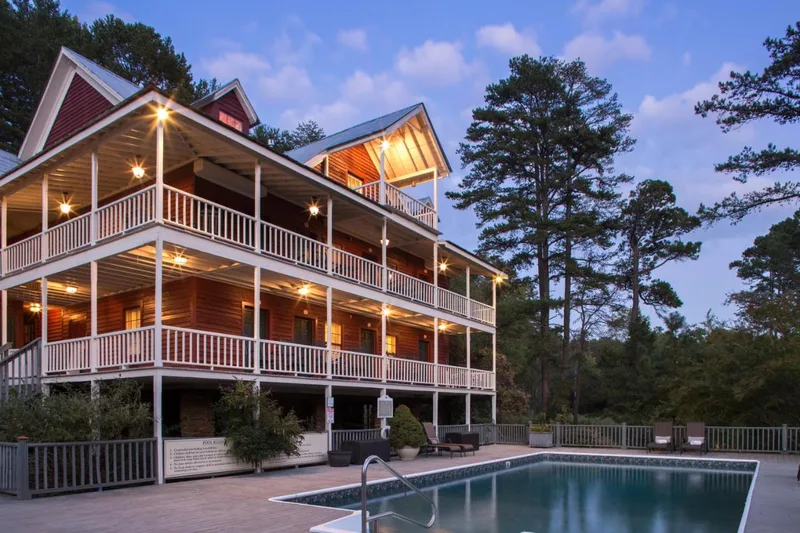
Set in a valley of the Blue Ridge Mountains near Tallulah Falls, this frame hotel grew in three stages from a c. 1870 farmhouse built by the Davidson family. A three-story residence hall followed around 1885 and a two-story middle section around 1900. Pine floors and paneling, fieldstone foundations and chimneys, and railroad rails used as fireplace lintels show the use of local materials. The plain interiors reflected the purity and health guests hoped to gain at a mineral springs. The complex also includes a log barn, a smokehouse, a mineral spring and a stone tablet listing the water's contents. Summer visitors from South Georgia arrived by the Tallulah Falls Railroad and were met by mule-drawn surrey. The hotel declined after the falls were harnessed for power in 1918 and ceased hotel operation in the late 1920s, later becoming Rocky Bottom Farm. It is considered one of the last mineral springs hotels in Georgia and reopened as an inn in 1987.
Machine-generated summary. This summary was generated by a language model from the official nomination document and has not been reviewed line by line by an editor. It may contain errors. Check the source document before relying on any detail. Source: nomination document (PDF) · catalog entry. Generated October 2026 (model claude-sonnet-5-5, prompt v1.0-2026-10-29).
| Period of significance | c. 1870-1939 |
|---|---|
| Styles | OTHER: Vernacular Victorian |
| Areas of significance | Commerce, Exploration/Settlement, Architecture |
| Acreage | 11.8 |
| Boundary source | NPS cultural-resource GIS polygon |
| Full listing page | Glen-Ella Springs Hotel (property record) |
What listing means for this property
This is a historic district. Buildings within its boundary are either contributing (they add to the district's significance) or non-contributing. Owners of contributing income-producing buildings can claim the 20% federal rehabilitation tax credit; homeowners should look at state credits. National Register districts impose no design review by themselves; a local historic district ordinance, if one exists, does (the difference explained).
General information, not legal or tax advice. Rules change; confirm with your State Historic Preservation Office or a qualified adviser.