Georgia School for the Deaf Historic District

Why it's listed
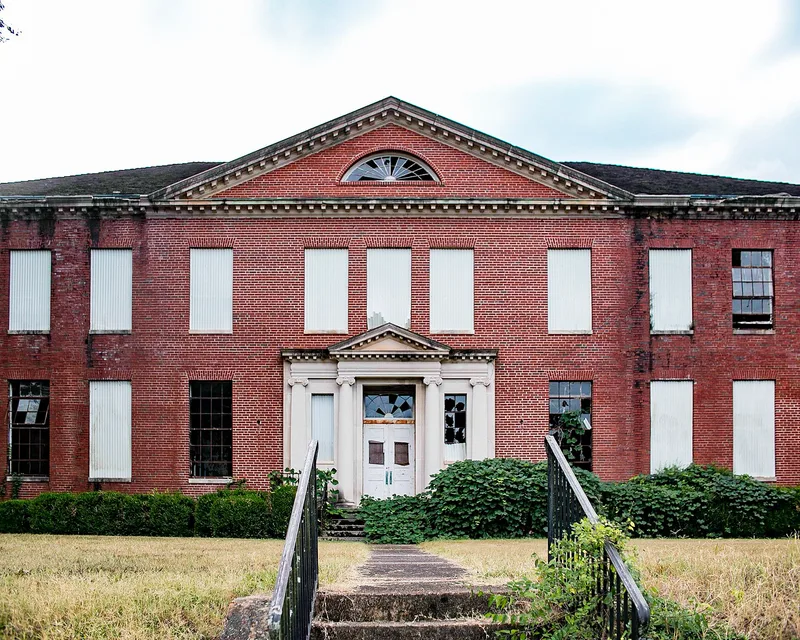
Georgia's school for deaf children has occupied this four-acre campus in Cave Spring since its founding in 1847. The historic district holds four older buildings, one postwar dormitory, a landscaped west lawn and connecting walks and courtyards. Fannin Hall, begun in 1849 as a simple gabled brick building, was extended in the 1850s, given Victorian Gothic ornament in the 1880s and remodeled in Colonial Revival style in the 1920s, which gives it its present mansard-roofed look. Two brick dormitories, one built in 1907, stand behind it. Across Padlock Street is an 1894 industrial arts building, cruciform in plan, with round arches and corbelled brick in a Romanesque Revival manner. The district was listed for its architecture, its surviving campus landscape and its role in deaf education. The school was the tenth state-supported school for the deaf in the United States, and its shoemaking and printing programs served the Cave Spring community.
Machine-generated summary. This summary was generated by a language model from the official nomination document and has not been reviewed line by line by an editor. It may contain errors. Check the source document before relying on any detail. Source: nomination document (PDF) · catalog entry. Generated October 2026 (model claude-sonnet-5-5, prompt v1.0-2026-10-29).
| Styles | Richardsonian Romanesque (industrial arts building); Colonial Revival and Victorian Gothic phases (Fannin Hall) |
|---|---|
| Areas of significance | Landscape Architecture, Education, Architecture |
| Acreage | 4 |
| Boundary source | NPS cultural-resource GIS polygon |
| Full listing page | Georgia School for the Deaf Historic District (property record) |
What listing means for this property
This is a historic district. Buildings within its boundary are either contributing (they add to the district's significance) or non-contributing. Owners of contributing income-producing buildings can claim the 20% federal rehabilitation tax credit; homeowners should look at state credits. National Register districts impose no design review by themselves; a local historic district ordinance, if one exists, does (the difference explained).
General information, not legal or tax advice. Rules change; confirm with your State Historic Preservation Office or a qualified adviser.