Garden Club of Georgia Museum-Headquarters House,Founder's Memorial Garden

The National Park Service has not published a boundary polygon for this district; the map shows the listed properties inside it and the district's reference point.
Why it's listed
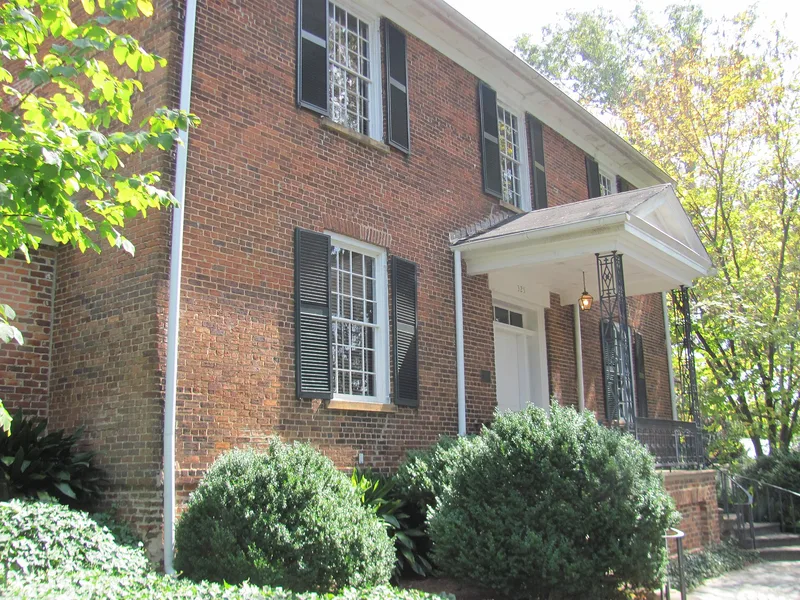
Set high above Lumpkin Street on the University of Georgia campus in Athens, this red brick house was built in 1857 as a home for university professors, together with a kitchen building and a smokehouse. Teachers were expected to live on campus, monitor student activity and board students. Over the years the house served as a dining hall, offices, classrooms, a residence for the first Dean of Women, a sorority chapter house, and the Department of Landscape Architecture. In 1939 the department's head proposed the Founder's Memorial Garden, a joint project with the Garden Club of Georgia, honoring the twelve founders of America's first garden club, formed in Athens in 1891. The garden includes a boxwood garden, a sunken garden with a serpentine wall, and informal plantings of Piedmont species. The Garden Club restored the buildings between 1959 and 1963 and now operates the house as a museum with period furnishings. The complex adjoins Old North Campus and forms part of its historic setting.
Machine-generated summary. This summary was generated by a language model from the official nomination document and has not been reviewed line by line by an editor. It may contain errors. Check the source document before relying on any detail. Source: nomination document (PDF) · catalog entry. Generated October 2026 (model claude-sonnet-5-5, prompt v1.0-2026-10-29).
| Period of significance | 19th Century; specific date 1857 (garden developed 1939-1946) |
|---|---|
| Styles | Greek Revival detailing (trabeated doorway with sidelights and transom) |
| Areas of significance | Landscape Architecture, Architecture, Social History |
| Acreage | 9.9 |
| Boundary source | not published |
| Full listing page | Garden Club of Georgia Museum-Headquarters House,Founder's Memorial Garden (property record) |
What listing means for this property
This is a historic district. Buildings within its boundary are either contributing (they add to the district's significance) or non-contributing. Owners of contributing income-producing buildings can claim the 20% federal rehabilitation tax credit; homeowners should look at state credits. National Register districts impose no design review by themselves; a local historic district ordinance, if one exists, does (the difference explained).
General information, not legal or tax advice. Rules change; confirm with your State Historic Preservation Office or a qualified adviser.