Forsyth Commercial Historic District

Why it's listed
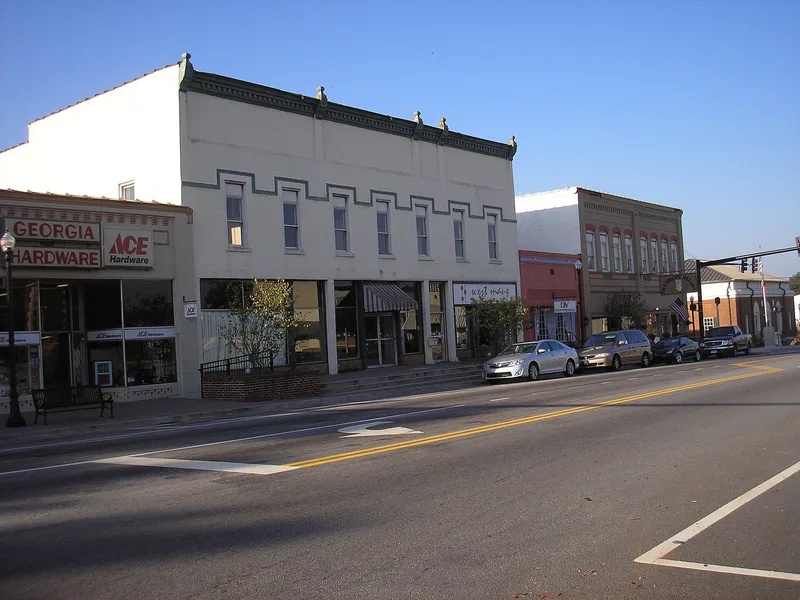
Downtown Forsyth, Georgia, is a compact commercial district of about 15 acres centered on the Monroe County Courthouse square. Most buildings are one- or two-story brick structures from the mid 19th to early 20th century, set along a tight grid of streets and sharing party walls and a common setback. Brick is used structurally and decoratively, alongside cast-iron storefront columns, stone, terra cotta, pressed metal, and wood. Italianate, Romanesque, Renaissance Revival, Neoclassical, and Colonial Revival styles all appear. Forsyth was founded in 1823, and its grid plan was laid out on high ground at the center of circular city limits. Growth followed the arrival of the railroad in 1838, cotton agriculture, Tift College, and two cotton mills around 1900. The district housed wholesale and retail trade, banks, hotels, entertainment, and cotton factors' offices, and it remains the seat of county and city government. It was recognized for its architecture, commerce, planning, and government history.
Machine-generated summary. This summary was generated by a language model from the official nomination document and has not been reviewed line by line by an editor. It may contain errors. Check the source document before relying on any detail. Source: nomination document (PDF) · catalog entry. Generated October 2026 (model claude-sonnet-5-5, prompt v1.0-2026-10-29).
| Period of significance | 1820s-early 20th century (stated as "182 -early 20th century") |
|---|---|
| Styles | Italianate, Romanesque, Renaissance Revival, Victorian Eclectic, Neoclassical, Commercial, and Colonial Revival |
| Areas of significance | Community Planning and Development, Commerce, Politics/Government, Architecture |
| Acreage | 15 |
| Boundary source | NPS cultural-resource GIS polygon |
| Full listing page | Forsyth Commercial Historic District (property record) |
What listing means for this property
This is a historic district. Buildings within its boundary are either contributing (they add to the district's significance) or non-contributing. Owners of contributing income-producing buildings can claim the 20% federal rehabilitation tax credit; homeowners should look at state credits. National Register districts impose no design review by themselves; a local historic district ordinance, if one exists, does (the difference explained).
General information, not legal or tax advice. Rules change; confirm with your State Historic Preservation Office or a qualified adviser.