Fairburn Commercial Historic District

Why it's listed
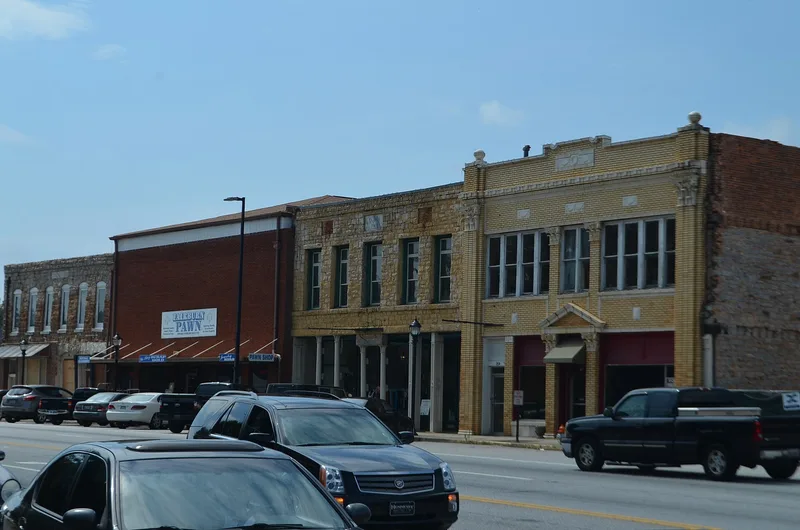
Downtown Fairburn, about 25 miles southwest of Atlanta, preserves a compact business center built around the railroad. The district covers roughly 12 acres and includes two angled blocks of one- to three-story commercial buildings along West Broad Street, a passenger depot and a freight depot, and three concrete railroad overpasses, all of the transportation structures dating from 1917. The storefronts use red and buff brick, stone, terra cotta and pressed metal, with cast-iron columns, transom windows and brick cornices. The Elder building of 1903 has a metal front marked by Mesker Bros. of St. Louis. Amateur architect Charles Lipham designed the Fairburn Banking Building and the Guy Hearn Ford Company. The district was recognized for architecture, commerce, transportation and its unusual angled street layout, which departs from the strict grid common in Georgia downtowns. Fairburn served as county seat of Campbell County from 1871 to 1932 and was known as a banking town because of its rail connection. The period of significance runs from 1869 to 1938.
Machine-generated summary. This summary was generated by a language model from the official nomination document and has not been reviewed line by line by an editor. It may contain errors. Check the source document before relying on any detail. Source: nomination document (PDF) · catalog entry. Generated October 2026 (model claude-sonnet-5-5, prompt v1.0-2026-10-29).
| Period of significance | 1869-1938 |
|---|---|
| Styles | Late Victorian: Italianate; Late 19th/20th century Revivals: Classical Revival; Late 19th/20th century American Movements: Commercial Style |
| Areas of significance | Community Planning and Development, Commerce, Transportation, Architecture |
| Acreage | 12 |
| Boundary source | NPS cultural-resource GIS polygon |
| Full listing page | Fairburn Commercial Historic District (property record) |
What listing means for this property
This is a historic district. Buildings within its boundary are either contributing (they add to the district's significance) or non-contributing. Owners of contributing income-producing buildings can claim the 20% federal rehabilitation tax credit; homeowners should look at state credits. National Register districts impose no design review by themselves; a local historic district ordinance, if one exists, does (the difference explained).
General information, not legal or tax advice. Rules change; confirm with your State Historic Preservation Office or a qualified adviser.