Elberton Commercial Historic District (Boundary Increase and Additional Documentation)

Why it's listed
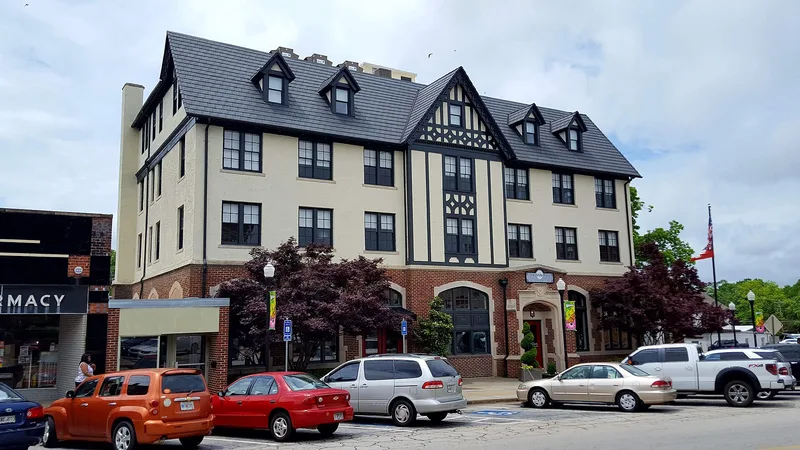
Elberton's historic downtown is a compact grid of streets around a central square called Sutton Square, set on high ground in the middle of the city's circular limits. Most buildings are two-story brick commercial structures from the late nineteenth and early twentieth centuries, sharing party walls and a common setback. Details include cast-iron storefront columns, corbelled cornices, segmental arches and terracotta or pressed-metal ornament. Exceptions include the Renaissance Revival county courthouse, the Tudor Revival Elbert Hotel and several Art Deco facades with black glass. The district was recognized for architecture, community planning and commerce. Elberton was designated county seat in 1803 and platted by 1808. Its downtown grew after the railroad arrived in 1878 and the granite industry emerged, shifting activity from river communities like Petersburg to trackside towns. The area served as the county's main center for retail, wholesale trade, banking, hotels, entertainment and granite-related offices.
Machine-generated summary. This summary was generated by a language model from the official nomination document and has not been reviewed line by line by an editor. It may contain errors. Check the source document before relying on any detail. Source: nomination document (PDF). Generated October 2026 (model claude-sonnet-5-5, prompt v1.0-2026-10-29).
| Period of significance | late 18th - early 20th century |
|---|---|
| Styles | Romanesque, Renaissance, Neoclassical, and Victorian Eclectic, with Renaissance Revival, Tudor Revival and Art Deco examples |
| Areas of significance | Architecture, Commerce, Community Planning and Development, Politics/Government |
| Acreage | 17 |
| Boundary source | NPS cultural-resource GIS polygon |
| Full listing page | Elberton Commercial Historic District (Boundary Increase and Additional Documentation) (property record) |
What listing means for this property
This is a historic district. Buildings within its boundary are either contributing (they add to the district's significance) or non-contributing. Owners of contributing income-producing buildings can claim the 20% federal rehabilitation tax credit; homeowners should look at state credits. National Register districts impose no design review by themselves; a local historic district ordinance, if one exists, does (the difference explained).
General information, not legal or tax advice. Rules change; confirm with your State Historic Preservation Office or a qualified adviser.