East End Historic District

Why it's listed
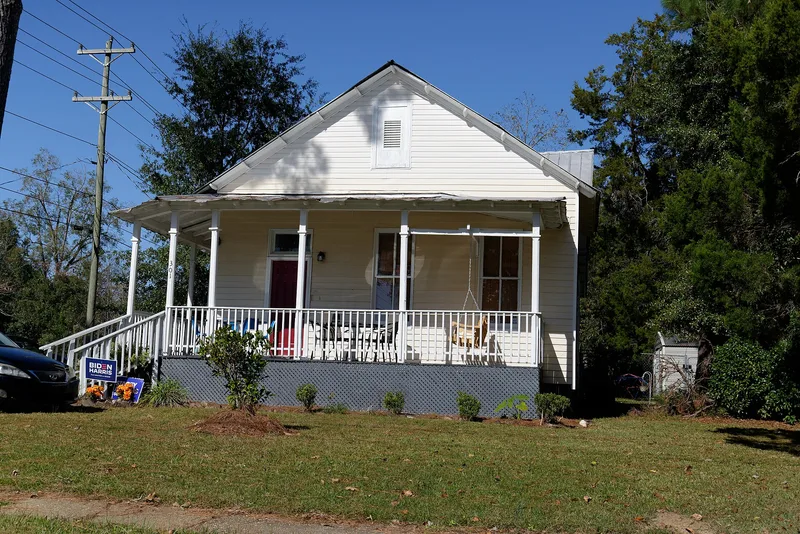
East End is a small residential neighborhood of about two dozen wood-frame houses on roughly ten to thirteen acres in Thomasville, Georgia, just east of Paradise Park. Its streets follow a gridiron pattern, with small, uniform lots planted with flowering trees, shrubs, oaks and pines. Young's Female College first developed the land after 1885. In 1894 it was sold to H.W. Hopkins, a local realtor and former mayor, who subdivided it and promoted its improvement. East End is regarded as the city's earliest documented planned residential subdivision. The houses are mostly late Victorian and Craftsman/Bungalow in style, with examples of Plantation Plain and Second Empire design, and most have front porches typical of south Georgia around 1900. Early residents included a carpenter and builder, a city policeman, a bookkeeper who later became sheriff, a railroad storeroom keeper and a house painter. The district was listed for its architecture, its community planning and the local history of its working and middle-class residents.
Machine-generated summary. This summary was generated by a language model from the official nomination document and has not been reviewed line by line by an editor. It may contain errors. Check the source document before relying on any detail. Source: nomination document (PDF) · catalog entry. Generated October 2026 (model claude-sonnet-5-5, prompt v1.0-2026-10-29).
| Period of significance | 1885, 1894-1920s |
|---|---|
| Styles | Late Victorian and Craftsman/Bungalow, with examples of Plantation Plain and Second Empire |
| Areas of significance | Architecture |
| Acreage | 13 |
| Boundary source | NPS cultural-resource GIS polygon |
| Full listing page | East End Historic District (property record) |
What listing means for this property
This is a historic district. Buildings within its boundary are either contributing (they add to the district's significance) or non-contributing. Owners of contributing income-producing buildings can claim the 20% federal rehabilitation tax credit; homeowners should look at state credits. National Register districts impose no design review by themselves; a local historic district ordinance, if one exists, does (the difference explained).
General information, not legal or tax advice. Rules change; confirm with your State Historic Preservation Office or a qualified adviser.