Dublin Commercial Historic District

Why it's listed
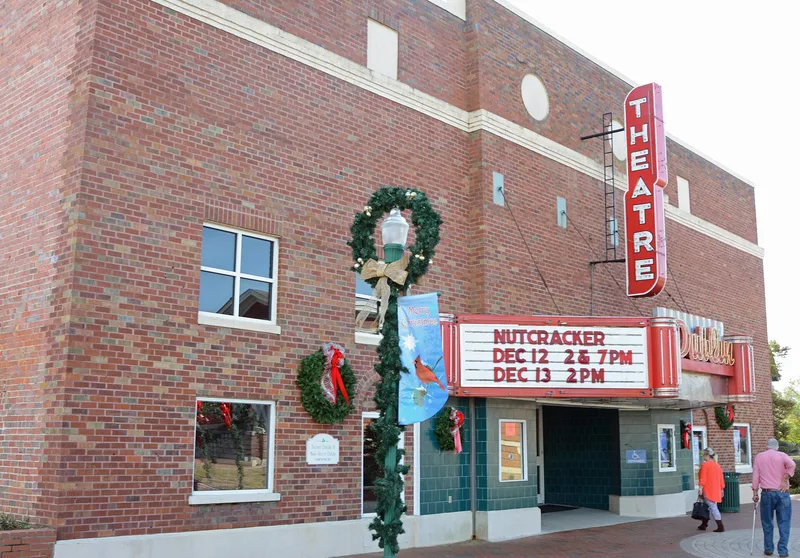
Downtown Dublin, the seat of Laurens County in central Georgia, is preserved as a district of 78 contributing resources arranged around a courthouse square at the east end of Jackson Avenue. Repeated fires in the mid-to-late 1800s left no commercial buildings older than the 1890s, and the Hicks Building of 1893 is the oldest. Rail lines arriving in 1891 spurred growth, and brick storefronts, warehouses and rail-related buildings followed. Landmarks include the 1904 Carnegie Library, the seven-story First National Bank Building of 1912, the 1912 post office, the 1926 Fred Roberts Hotel, the 1934 Martin Theater and the 1936 federal courthouse. The district is recognized for its role as a county seat and commercial center tied to cotton, river and rail trade, and for its range of architectural styles. It also retains its Sparta-type town plan, with the courthouse square anchoring the gridiron streets. Its period of significance runs from 1893 to 1951.
Machine-generated summary. This summary was generated by a language model from the official nomination document and has not been reviewed line by line by an editor. It may contain errors. Check the source document before relying on any detail. Source: nomination document (PDF) · catalog entry. Generated October 2026 (model claude-sonnet-5-5, prompt v1.0-2026-10-29).
| Period of significance | 1893-1951 |
|---|---|
| Styles | Gothic Revival, Italianate, Colonial Revival, Classical Revival, Neoclassical Revival, Commercial Style, International Style, Art Deco |
| Areas of significance | Agriculture, Architecture, Commerce, Community Planning and Development, Industry, Politics/Government, Transportation |
| Acreage | 32 |
| Boundary source | NPS cultural-resource GIS polygon |
| Full listing page | Dublin Commercial Historic District (property record) |
What listing means for this property
This is a historic district. Buildings within its boundary are either contributing (they add to the district's significance) or non-contributing. Owners of contributing income-producing buildings can claim the 20% federal rehabilitation tax credit; homeowners should look at state credits. National Register districts impose no design review by themselves; a local historic district ordinance, if one exists, does (the difference explained).
General information, not legal or tax advice. Rules change; confirm with your State Historic Preservation Office or a qualified adviser.