Downtown Athens Historic District (Additional Documentation, Boundary Increase II and Boundary Decrease)

Why it's listed
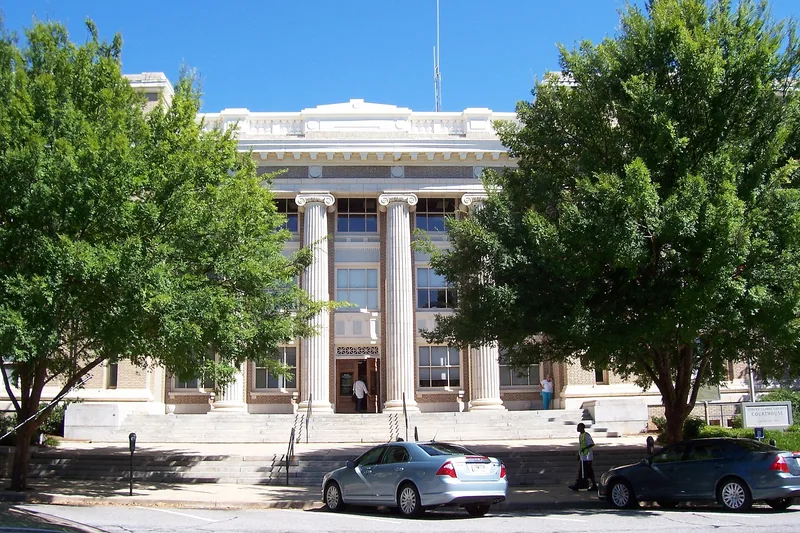
Downtown Athens in northeast Georgia contains a compact commercial core of mostly one- to two-story brick buildings with shared walls, built up to the sidewalk from the mid-19th to the mid-20th century. Civic landmarks include the 1914 courthouse, City Hall, the 1941 post office and courthouse, and the 1856 First Presbyterian Church. Taller buildings include the nine-story Holman Building of 1913. This documentation extends the district west to Pulaski Street, where buildings from the early to mid-20th century housed automobile sales and service businesses. It also takes in the "Hot Corner" at Washington and Hull Streets, which grew into the city's African-American commercial district and includes the 1910 Morton Building, built by Monroe Bowers "Pink" Morton. Two mid-20th-century buildings to the east are added, while altered or demolished areas on the eastern edge are removed. The period of significance is updated to cover the whole district.
Machine-generated summary. This summary was generated by a language model from the official nomination document and has not been reviewed line by line by an editor. It may contain errors. Check the source document before relying on any detail. Source: nomination document (PDF) · catalog entry. Generated October 2026 (model claude-sonnet-5-5, prompt v1.0-2026-10-29).
| Styles | Federal, Greek Revival, Second Empire, Romanesque Revival, Renaissance Revival, Beaux Arts, Classical Revival, Commercial Style, Art Moderne, Art Deco |
|---|---|
| Areas of significance | Architecture, Commerce, Community Planning and Development, Black, Politics/Government |
| Acreage | 24 |
| Boundary source | NPS cultural-resource GIS polygon |
| Full listing page | Downtown Athens Historic District (Additional Documentation, Boundary Increase II and Boundary Decrease) (property record) |
What listing means for this property
This is a historic district. Buildings within its boundary are either contributing (they add to the district's significance) or non-contributing. Owners of contributing income-producing buildings can claim the 20% federal rehabilitation tax credit; homeowners should look at state credits. National Register districts impose no design review by themselves; a local historic district ordinance, if one exists, does (the difference explained).
General information, not legal or tax advice. Rules change; confirm with your State Historic Preservation Office or a qualified adviser.