Downtown Athens Historic District

Why it's listed
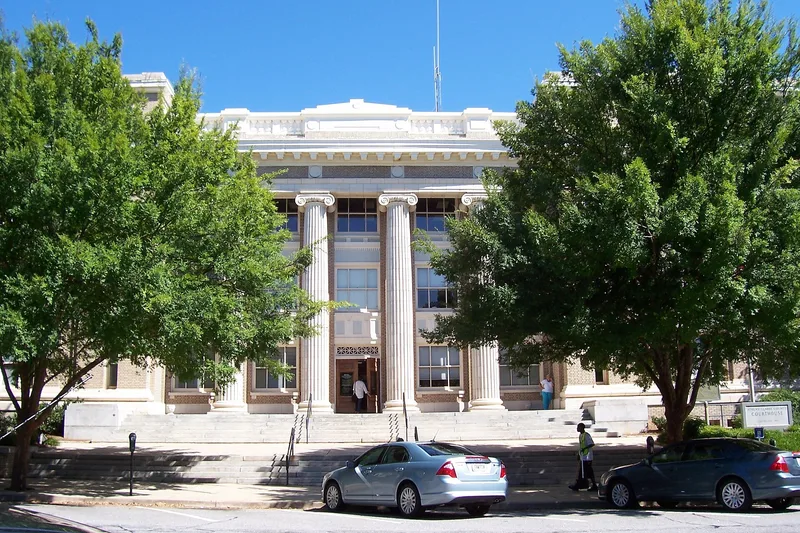
Downtown Athens occupies high ground on the west bank of the Oconee River's North Fork. Athens was founded in 1801 together with the University of Georgia, and the district takes in much of the town's first settled area, bounded by Lumpkin, Hancock, Foundry and Broad Streets. Broad Street, the town's main street, separates the university from the commercial blocks. Notable buildings include the Franklin House, a Greek Revival hotel of about 1845, and the Gothic-inspired Old National Bank Building of about 1866. A Richardsonian Romanesque building from about 1885 stands nearby on Broad Street. On Clayton Street, once a residential avenue and now a retail center, the Michael Brothers store of 1921 was designed by Neel Reid in the Renaissance Revival mode. Streets were once paved with vitrified brick, cobblestones and creosoted wood blocks. The district keeps much of its nineteenth and early twentieth century character. Some buildings were altered, while other owners restored theirs, and the city planted trees and shrubs along the streets.
Machine-generated summary. This summary was generated by a language model from the official nomination document and has not been reviewed line by line by an editor. It may contain errors. Check the source document before relying on any detail. Source: nomination document (PDF) · catalog entry. Generated October 2026 (model claude-sonnet-5-5, prompt v1.0-2026-10-29).
| Styles | Mixed commercial styles including Greek Revival, Gothic-inspired, Richardsonian Romanesque, Italianate and Renaissance Revival |
|---|---|
| Areas of significance | Politics/Government, Commerce, Social History, Architecture |
| Acreage | 40 |
| Boundary source | NPS cultural-resource GIS polygon |
| Full listing page | Downtown Athens Historic District (property record) |
What listing means for this property
This is a historic district. Buildings within its boundary are either contributing (they add to the district's significance) or non-contributing. Owners of contributing income-producing buildings can claim the 20% federal rehabilitation tax credit; homeowners should look at state credits. National Register districts impose no design review by themselves; a local historic district ordinance, if one exists, does (the difference explained).
General information, not legal or tax advice. Rules change; confirm with your State Historic Preservation Office or a qualified adviser.