Donalsonville Historic District

Why it's listed
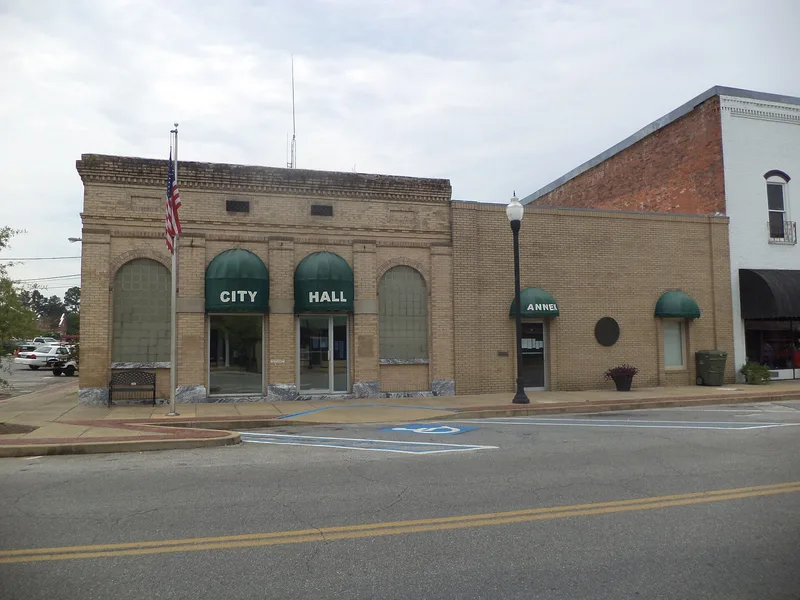
Downtown Donalsonville, in the far southwest corner of Georgia, grew from a gridiron plan laid out in 1889 as the Alabama Midland Railway came through land owned by J. E. Donalson. The district holds attached one- and two-story brick stores along West Second Street with display windows, transoms and corbeled cornices. Its landmarks include the 1922 Beaux Arts Seminole County Courthouse by William J. J. Chase, the Oceola Hotel built between 1906 and 1910 and designed by Dennis and Dennis of Macon, and the Olive Theater. Two agricultural industrial complexes, the Planters Products Company and the Donalsonville Grain and Elevator Company, processed peanuts shipped by rail. Seminole Memorial Hospital, built about 1940, served both white and Black patients, though under segregation, until it closed in the late 1960s. Together these resources show how the town developed as the commercial, governmental and industrial center of Seminole County between 1889 and 1950.
Machine-generated summary. This summary was generated by a language model from the official nomination document and has not been reviewed line by line by an editor. It may contain errors. Check the source document before relying on any detail. Source: nomination document (PDF) · catalog entry. Generated October 2026 (model claude-sonnet-5-5, prompt v1.0-2026-10-29).
| Period of significance | 1889-1950 |
|---|---|
| Styles | Late 19th and 20th Century Revivals: Beaux Arts; Late 19th and Early 20th Century American Movements: Commercial Style |
| Areas of significance | Architecture, Community Planning and Development, Commerce, Industry, Transportation, Health/Medicine, Politics/Government |
| Acreage | 55 |
| Boundary source | NPS cultural-resource GIS polygon |
| Full listing page | Donalsonville Historic District (property record) |
What listing means for this property
This is a historic district. Buildings within its boundary are either contributing (they add to the district's significance) or non-contributing. Owners of contributing income-producing buildings can claim the 20% federal rehabilitation tax credit; homeowners should look at state credits. National Register districts impose no design review by themselves; a local historic district ordinance, if one exists, does (the difference explained).
General information, not legal or tax advice. Rules change; confirm with your State Historic Preservation Office or a qualified adviser.