Dewey City Historic District

Why it's listed
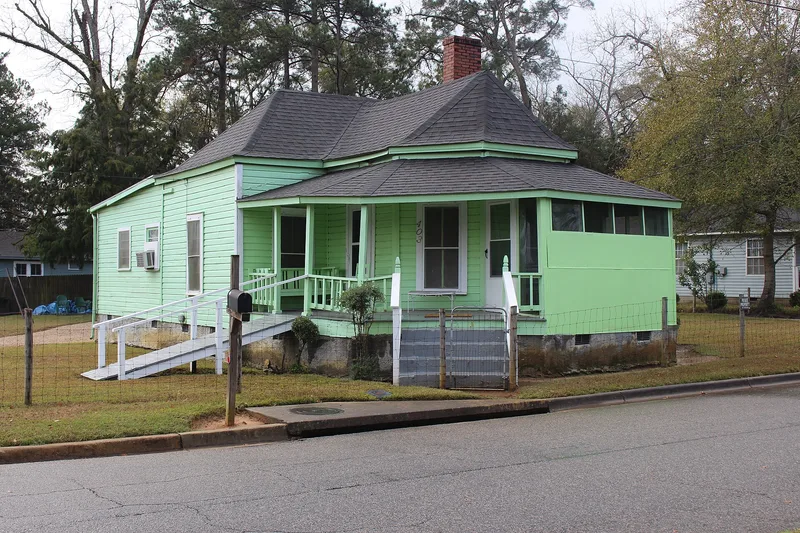
Dewey City is a historically African-American neighborhood just west of downtown Thomasville, Georgia, laid out in a gridiron of east-west and north-south streets between two creeks. Lots were first platted in 1899 as the Dewey City Subdivision, likely named for Admiral George Dewey, and most of the area was platted by 1911. Later additions, including the 1947 Douglass Heights subdivision, carried development to about 1962. The district holds modest working-class housing, including shotgun houses, gabled wing and pyramid cottages, many bungalows with Craftsman details, American Small Houses, and concrete block houses built from the late 1950s by Otis Johnson's company with local Black carpenters and masons. Three Baptist churches and the Douglass School campus anchor community life. The school, which began in 1909, is central to the area's educational tradition. Its International Style junior high building contributes to the district. Many newer houses are noncontributing.
Machine-generated summary. This summary was generated by a language model from the official nomination document and has not been reviewed line by line by an editor. It may contain errors. Check the source document before relying on any detail. Source: nomination document (PDF) · catalog entry. Generated October 2026 (model claude-sonnet-5-5, prompt v1.0-2026-10-29).
| Period of significance | Through 1962 (start date not shown in the excerpt) |
|---|---|
| Styles | Vernacular house types (shotgun, gabled wing cottage, pyramid cottage, New South cottage, American Small House, ranch), Bungalow/Craftsman, and International Style (Douglass Junior High School) |
| Areas of significance | Architecture, Community Planning and Development, Education, Black |
| Acreage | 110 |
| Boundary source | NPS cultural-resource GIS polygon |
| Full listing page | Dewey City Historic District (property record) |
What listing means for this property
This is a historic district. Buildings within its boundary are either contributing (they add to the district's significance) or non-contributing. Owners of contributing income-producing buildings can claim the 20% federal rehabilitation tax credit; homeowners should look at state credits. National Register districts impose no design review by themselves; a local historic district ordinance, if one exists, does (the difference explained).
General information, not legal or tax advice. Rules change; confirm with your State Historic Preservation Office or a qualified adviser.