Daffin Park-Parkside Place Historic District

Why it's listed
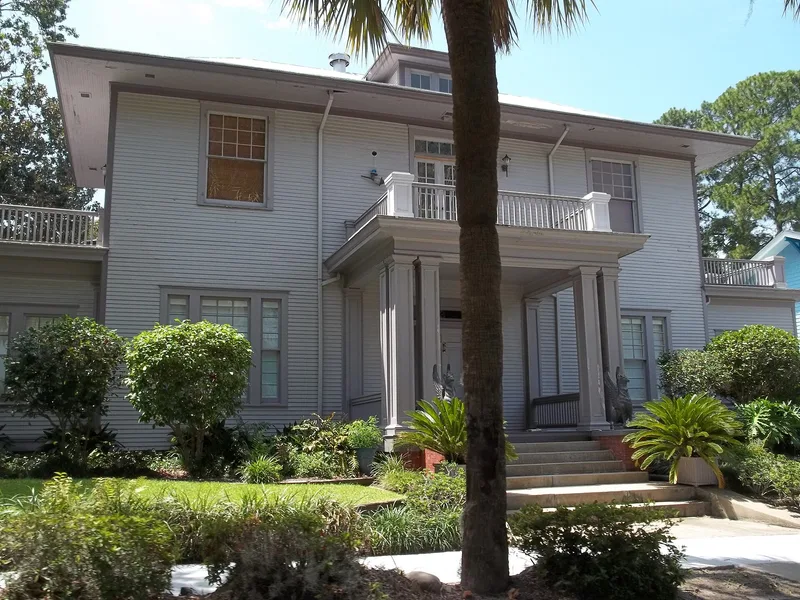
Daffin Park and the adjoining Parkside Place neighborhood form a historic district in southeastern Savannah. The park was designed in 1907 by landscape architect John Nolen on a symmetrical Beaux Arts plan, with a wide, tree-lined central mall, circular nodes, athletic fields, a playground and live oaks planted along its boundaries. Grayson Stadium, built in 1941 to replace an earlier municipal stadium, still hosts baseball. South of the park, the Parkside Land Company laid out Parkside Place from about 1913 on a gridiron of streets with rear service lanes, granite curbs and regularly spaced street trees. Its houses, built mainly from the 1910s to the 1940s, include Craftsman bungalows, Colonial Revival Cape Cod cottages and pared-down Tudor Revival homes. The district is recognized for landscape design, architecture and community planning, as an early automobile suburb connected to streetcar lines and planned around a major public park.
Machine-generated summary. This summary was generated by a language model from the official nomination document and has not been reviewed line by line by an editor. It may contain errors. Check the source document before relying on any detail. Source: nomination document (PDF) · catalog entry. Generated October 2026 (model claude-sonnet-5-5, prompt v1.0-2026-10-29).
| Period of significance | 1907-1949 |
|---|---|
| Styles | Beaux Arts, Tudor Revival, Colonial Revival, Bungalow/Craftsman |
| Areas of significance | Landscape Architecture, Architecture, Community Planning and Development |
| Acreage | 155 |
| Boundary source | NPS cultural-resource GIS polygon |
| Full listing page | Daffin Park-Parkside Place Historic District (property record) |
What listing means for this property
This is a historic district. Buildings within its boundary are either contributing (they add to the district's significance) or non-contributing. Owners of contributing income-producing buildings can claim the 20% federal rehabilitation tax credit; homeowners should look at state credits. National Register districts impose no design review by themselves; a local historic district ordinance, if one exists, does (the difference explained).
General information, not legal or tax advice. Rules change; confirm with your State Historic Preservation Office or a qualified adviser.