Culloden Historic District

Why it's listed
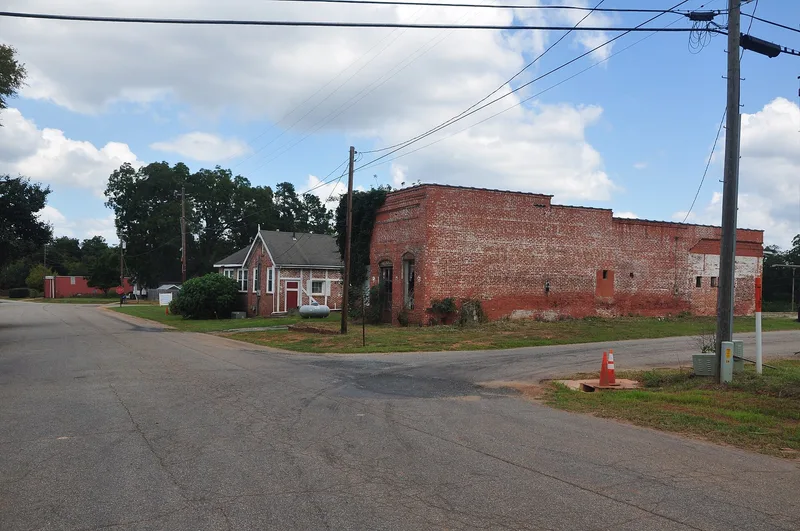
Culloden is a very small community on a low ridge in the lower Piedmont of Monroe County, Georgia, and its historic district preserves the surviving core of the town. The district includes a downtown of one-story brick commercial buildings with segmental arches and corbelled cornices, a public well and wellhouse, and the former railroad tract. It also contains blocks of frame houses in Italianate, Queen Anne and Neoclassical styles, along with churches, a 1916 auditorium and schoolhouse, and farmhouses to the southwest. Notable buildings include the 1894 Queen Anne Holmes Hotel, built to serve rail passengers, and the 1893 Gothic Revival Methodist Church. Culloden began as a crossroads, got a post office in 1825, and was incorporated in 1887. The railroads arrived in 1888 and shifted growth northward along the tracks. Service ended in 1922 on one line and in the 1950s on the other, and the tracks and depot were later removed. The district records this rise and decline.
Machine-generated summary. This summary was generated by a language model from the official nomination document and has not been reviewed line by line by an editor. It may contain errors. Check the source document before relying on any detail. Source: nomination document (PDF) · catalog entry. Generated October 2026 (model claude-sonnet-5-5, prompt v1.0-2026-10-29).
| Period of significance | 1800-1899 and 1900- (checked periods; no specific dates given) |
|---|---|
| Styles | Mixed: Plantation Plain, Greek Revival, Italianate, Queen Anne, Gothic Revival, Neoclassical, and medieval-revival |
| Areas of significance | Historic - Non-Aboriginal, Education, Architecture, Social History |
| Acreage | 155 |
| Boundary source | NPS cultural-resource GIS polygon |
| Full listing page | Culloden Historic District (property record) |
What listing means for this property
This is a historic district. Buildings within its boundary are either contributing (they add to the district's significance) or non-contributing. Owners of contributing income-producing buildings can claim the 20% federal rehabilitation tax credit; homeowners should look at state credits. National Register districts impose no design review by themselves; a local historic district ordinance, if one exists, does (the difference explained).
General information, not legal or tax advice. Rules change; confirm with your State Historic Preservation Office or a qualified adviser.