Crown Mill Historic District

Why it's listed
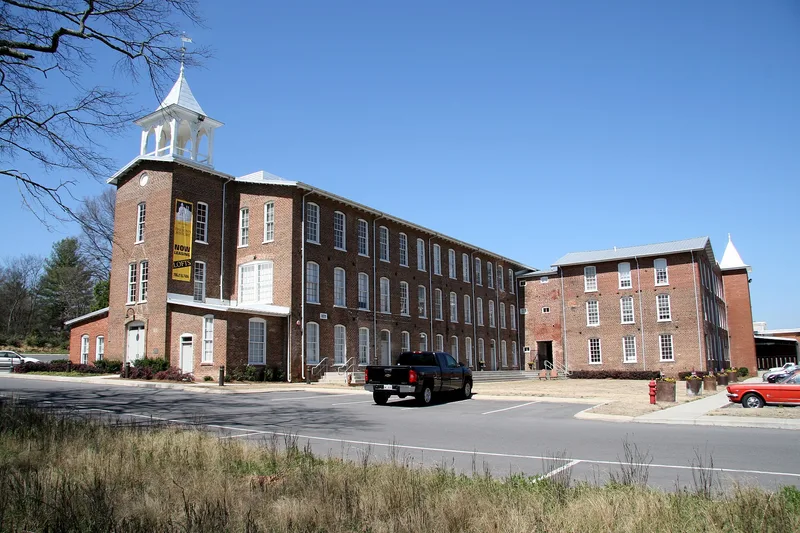
Crown Mill Historic District in northwest Dalton, Georgia, combines a cotton factory with the village built for its workers. The mill opened in 1884-85 and grew through additions in 1894, 1897-1900 and 1903. A second mill followed in 1906-07 and was enlarged in 1915-16. Warehouses went up in the late 19th century, in 1923 and in the 1940s. The brick buildings have load-bearing walls, segmental arches and slow-burning timber interiors, and railroad sidings serve the complex. The village sits on a knoll beside the factory. It holds several dozen modest frame houses of five basic types, prefabricated by the Farrar Lumber Company of Dalton, along with a company store, a school, recreation areas, a spring and reservoir, and the mill owner's house. The district was noted as exceptionally well preserved, with few disfiguring alterations. Parts still produce carpet yarn, while the 1894 office now holds a local historical archive.
Machine-generated summary. This summary was generated by a language model from the official nomination document and has not been reviewed line by line by an editor. It may contain errors. Check the source document before relying on any detail. Source: nomination document (PDF) · catalog entry. Generated October 2026 (model claude-sonnet-5-5, prompt v1.0-2026-10-29).
| Styles | Industrial brick mill buildings with stick-style office decoration; frame mill village houses with Eastlake trim on some, and a Cape Cod-style duplex type |
|---|---|
| Areas of significance | Industry, Community Planning and Development, Landscape Architecture, Commerce, Engineering, Architecture |
| Acreage | 85 |
| Boundary source | NPS cultural-resource GIS polygon |
| Full listing page | Crown Mill Historic District (property record) |
What listing means for this property
This is a historic district. Buildings within its boundary are either contributing (they add to the district's significance) or non-contributing. Owners of contributing income-producing buildings can claim the 20% federal rehabilitation tax credit; homeowners should look at state credits. National Register districts impose no design review by themselves; a local historic district ordinance, if one exists, does (the difference explained).
General information, not legal or tax advice. Rules change; confirm with your State Historic Preservation Office or a qualified adviser.