Crowder, William Leonard, Home Place

Why it's listed
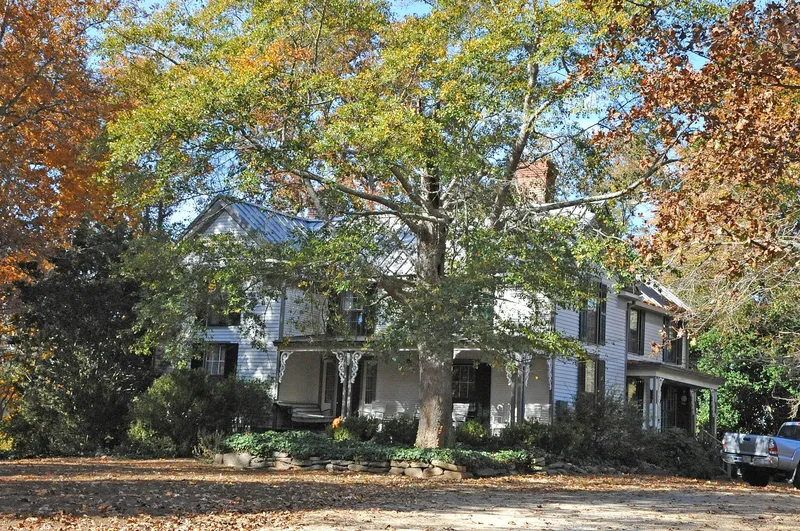
This farm property in the Handy Crossroads area, about 10 miles west of Newnan in Coweta County, Georgia, centers on a two-story, L-shaped, wood-framed farmhouse built in the 1880s. It has a gabled roof, two brick chimneys, a granite foundation, and a front porch with Victorian gingerbread cutwork. Outbuildings include a chicken house, privy, and grist mill, while the sites of a cotton gin, cane mill, wheelbarrow factory, and general store are also on the land. William Leonard Crowder (1847-1918) acquired the property in 1872 and ran these businesses alongside the farm. His store served local residents as a place to buy goods, collect mail, and vote. The grounds feature semi-circular terraces, old trees, and a swept-sand front yard. The property was recognized for its agriculture, commerce, architecture, landscape architecture, and potential historic archaeology, with a period of significance from 1880 to 1930.
Machine-generated summary. This summary was generated by a language model from the official nomination document and has not been reviewed line by line by an editor. It may contain errors. Check the source document before relying on any detail. Source: nomination document (PDF) · catalog entry. Generated October 2026 (model claude-sonnet-5-5, prompt v1.0-2026-10-29).
| Period of significance | 1880-1930 |
|---|---|
| Styles | Late 19th-century vernacular Piedmont Georgia farmhouse with Victorian gingerbread detailing |
| Areas of significance | Commerce, Agriculture, Architecture |
| Acreage | 44 |
| Boundary source | NPS cultural-resource GIS polygon |
| Full listing page | Crowder, William Leonard, Home Place (property record) |
What listing means for this property
This is a historic district. Buildings within its boundary are either contributing (they add to the district's significance) or non-contributing. Owners of contributing income-producing buildings can claim the 20% federal rehabilitation tax credit; homeowners should look at state credits. National Register districts impose no design review by themselves; a local historic district ordinance, if one exists, does (the difference explained).
General information, not legal or tax advice. Rules change; confirm with your State Historic Preservation Office or a qualified adviser.