Corbett Farm

Why it's listed
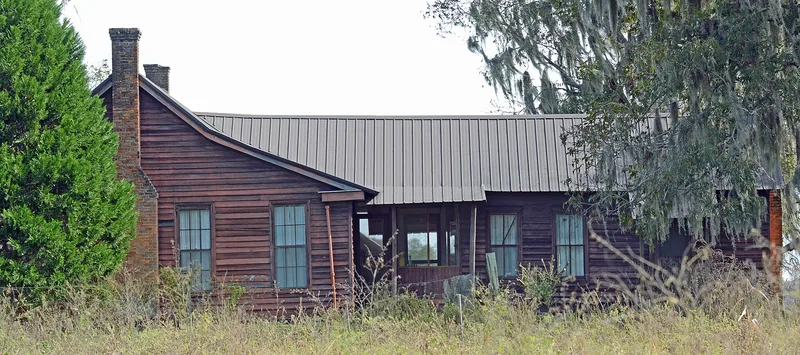
Corbett Farm is an 84-acre working farm in rural Echols County, near Lake Park, Georgia. Its centerpiece is a wood-frame hall-parlor house built about 1878-1879 for Bryant W. Corbett, with a rear ell holding the dining room and kitchen, which gives the house a T-shape. The house keeps its original pine doors, mantels, plank walls and floors, and it was built with mortise-and-tenon joints, wooden pegs and square nails. Around it are a wash shelter, cotton and corn house, car shelter, chicken house and pen, a brick-collared well, and a grape arbor. One later garage does not contribute. The farm was listed for its agricultural history, its intact small farmhouse, and its preserved working yard, a landscape of food production, animal care, washing, cooking and storage. The same family has owned and farmed the land since the late 1870s. Corn and peanuts were the main early crops, and some cotton was added later. The farm was named a Georgia Centennial Family Farm in 1996.
Machine-generated summary. This summary was generated by a language model from the official nomination document and has not been reviewed line by line by an editor. It may contain errors. Check the source document before relying on any detail. Source: nomination document (PDF) · catalog entry. Generated October 2026 (model claude-sonnet-5-5, prompt v1.0-2026-10-29).
| Period of significance | c.1878-1950 |
|---|---|
| Styles | Other: Hall-Parlor House |
| Areas of significance | Agriculture, Architecture, Landscape Architecture |
| Boundary source | NPS cultural-resource GIS polygon |
| Full listing page | Corbett Farm (property record) |
What listing means for this property
This is a historic district. Buildings within its boundary are either contributing (they add to the district's significance) or non-contributing. Owners of contributing income-producing buildings can claim the 20% federal rehabilitation tax credit; homeowners should look at state credits. National Register districts impose no design review by themselves; a local historic district ordinance, if one exists, does (the difference explained).
Noted as vacant in the nomination. Nomination documents can be decades old; current status may differ. If you are considering buying an empty listed property, read the due-diligence checklist.
General information, not legal or tax advice. Rules change; confirm with your State Historic Preservation Office or a qualified adviser.