Cole Town District
Why it's listed
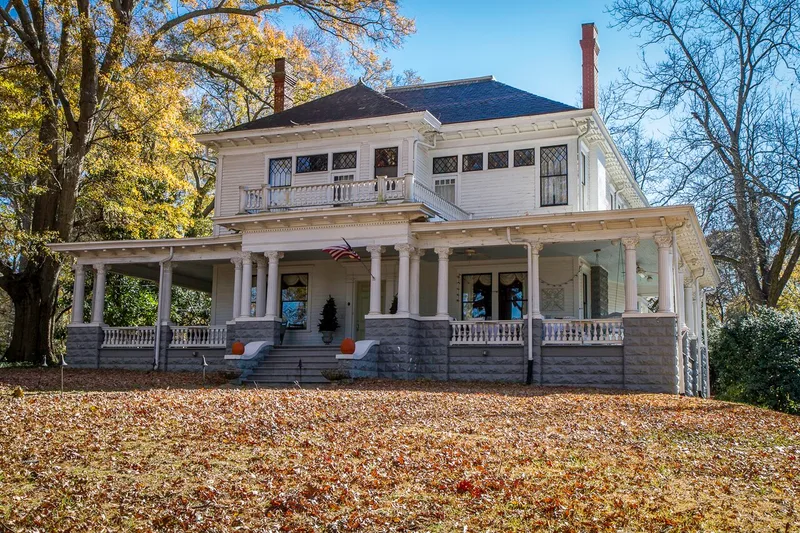
Cole Town is a neighborhood east of Newnan's business district that grew up around the R.D. Cole Company, a woodworking and machinery firm founded in 1854. The district covers about 54 acres and holds roughly 80 houses built from the mid nineteenth to the early twentieth century, ranging from mansions to shotgun houses. Most are wood-framed, many with sawn and turned detailing, and nearly every major American style of the period appears. Most land and houses were controlled or built by the Cole family for relatives and company associates, and the area housed workers, managers, officers and founders. Notable features include houses designed by Leila Ross Wilburn and Edward E. Dougherty, a brick-veneered concrete-framed house, a mid-1880s brick and timber factory, an early 1930s steel-framed factory, and an early concrete bridge on Salbide Avenue. Informal yards and street trees add to the setting. The site of the original Cole plant may also hold archaeological information.
Machine-generated summary. This summary was generated by a language model from the official nomination document and has not been reviewed line by line by an editor. It may contain errors. Check the source document before relying on any detail. Source: nomination document (PDF) · catalog entry. Generated October 2026 (model claude-sonnet-5-5, prompt v1.0-2026-10-29).
| Period of significance | Mid 19th century-early 20th century |
|---|---|
| Styles | Greek Revival, Victorian Gothic, Victorian Eclectic, Eastlake, Queen Anne, Neoclassical, Georgian Revival, Prairie, Craftsman/Bungalow, and Tudor |
| Areas of significance | Industry, Community Planning and Development, Landscape Architecture, Historic - Non-Aboriginal, Architecture |
| Acreage | 54 |
| Boundary source | NPS cultural-resource GIS polygon |
| Full listing page | Cole Town District (property record) |
What listing means for this property
This is a historic district. Buildings within its boundary are either contributing (they add to the district's significance) or non-contributing. Owners of contributing income-producing buildings can claim the 20% federal rehabilitation tax credit; homeowners should look at state credits. National Register districts impose no design review by themselves; a local historic district ordinance, if one exists, does (the difference explained).
General information, not legal or tax advice. Rules change; confirm with your State Historic Preservation Office or a qualified adviser.