Cherokee Brick and Tile Company

Why it's listed
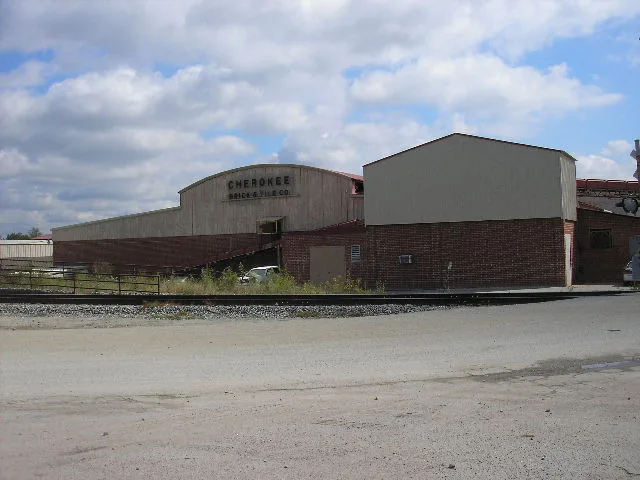
Cherokee Brick and Tile Company is a 4,000-acre industrial district in Macon, Georgia, that preserves every stage of brick production, from clay pits to finished product. A rail yard divides it: the manufacturing plant lies to the west and the clay mines and reserves to the east, near the Ocmulgee River. The plant's main buildings are the combined Plant Nos. 1 and 2, begun in 1904 and expanded repeatedly, and Plant No. 3, built in 1947-1949. A 1926 gambrel-roofed clay storage building feeds both through overhead conveyors. Smaller resources include a 1925 garage, a 1949 office, a laboratory dating to about 1904, and brickyard sheds. The mines range from hand-dug furrows of the 1870s to large mechanized pits, linked to the plant by roads, rail beds and a 1928 plate-girder turntable bridge over the river. The district is notable for showing how a single company grew and modernized over a century, supplying bricks for regional landmarks such as Wesleyan College's campus.
Machine-generated summary. This summary was generated by a language model from the official nomination document and has not been reviewed line by line by an editor. It may contain errors. Check the source document before relying on any detail. Source: nomination document (PDF) · catalog entry. Generated October 2026 (model claude-sonnet-5-5, prompt v1.0-2026-10-29).
| Styles | No Style |
|---|---|
| Areas of significance | Architecture, Engineering, Industry |
| Acreage | 4000 |
| Boundary source | NPS cultural-resource GIS polygon |
| Full listing page | Cherokee Brick and Tile Company (property record) |
What listing means for this property
This is a historic district. Buildings within its boundary are either contributing (they add to the district's significance) or non-contributing. Owners of contributing income-producing buildings can claim the 20% federal rehabilitation tax credit; homeowners should look at state credits. National Register districts impose no design review by themselves; a local historic district ordinance, if one exists, does (the difference explained).
General information, not legal or tax advice. Rules change; confirm with your State Historic Preservation Office or a qualified adviser.