Chatsworth Downtown Historic District

Why it's listed
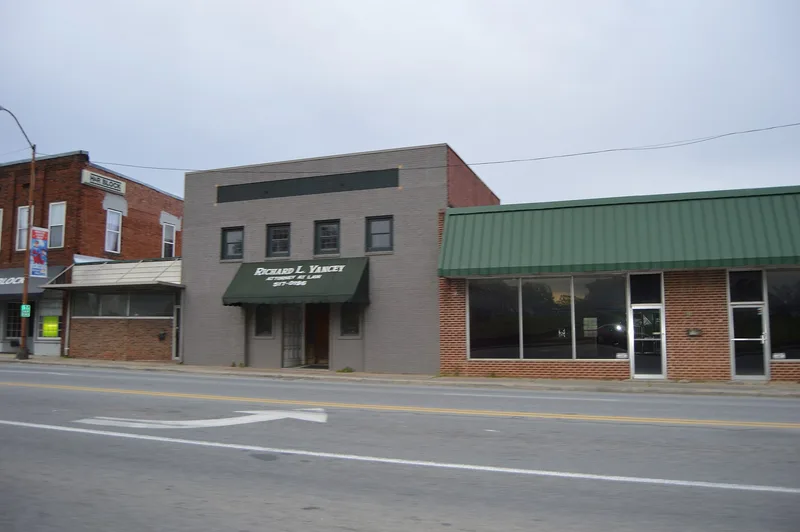
Chatsworth's downtown is a compact county seat core arranged around a courthouse square, laid out on a Washington-type plan after the Louisville & Nashville Railroad built tracks and a depot in 1905. The district holds one- and two-story brick commercial buildings in Commercial and International styles, along with the 1916 Murray County Courthouse and jail, the 1909 Wright Hotel, two mid-century churches, a Masonic lodge and a 1964 post office and federal building. Industrial and transportation traces include the Crown Chenille plant, a water treatment plant with fire station, a roadside motel, a gas station, the rail corridor and a 1939 highway bridge. Chatsworth became county seat in 1913, and the district covers development from 1905 through 1964. It is recognized for its representative architecture, its planned layout, and its role in local commerce, government and transportation. Of 79 resources, 50 contribute to its historic character.
Machine-generated summary. This summary was generated by a language model from the official nomination document and has not been reviewed line by line by an editor. It may contain errors. Check the source document before relying on any detail. Source: nomination document (PDF) · catalog entry. Generated October 2026 (model claude-sonnet-5-5, prompt v1.0-2026-10-29).
| Period of significance | 1905-1964 |
|---|---|
| Styles | Late Victorian/Romanesque Revival; Colonial Revival; Classical Revival; Commercial Style; International Style |
| Areas of significance | Architecture, Commerce, Community Planning and Development, Politics/Government, Transportation |
| Acreage | 44 |
| Boundary source | NPS cultural-resource GIS polygon |
| Full listing page | Chatsworth Downtown Historic District (property record) |
What listing means for this property
This is a historic district. Buildings within its boundary are either contributing (they add to the district's significance) or non-contributing. Owners of contributing income-producing buildings can claim the 20% federal rehabilitation tax credit; homeowners should look at state credits. National Register districts impose no design review by themselves; a local historic district ordinance, if one exists, does (the difference explained).
General information, not legal or tax advice. Rules change; confirm with your State Historic Preservation Office or a qualified adviser.