Central of Georgia Railway Company Shop Property
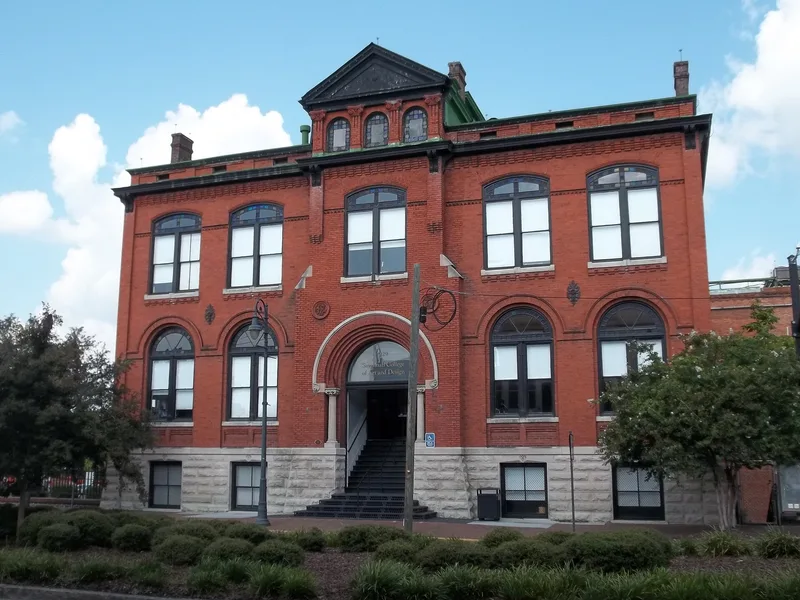

Why it's listed
Built between 1850 and 1855, this Savannah railway shop complex served the Central of Georgia Railroad, then among the most important lines in the Southeast. William Morrill Wadley, the line's superintendent and later president, designed it. The original group joined a machine shop, blacksmith shop, engine house and brick lumber shed, with a 125-foot ornamental smokestack nearby that also held a cast-iron water tank. Local brick from the Hermitage Plantation was used, and a Savannah foundry cast the iron band at the stack's base. An 1855 northern trade journal ranked the station among the most complete and elegant in the country. A later amendment widened the boundaries to take in the Red Building, Gray Building, freight warehouses, carpentry and paint shops, cotton yard gates and two canal bridges. Listing recognizes the complex as a rare survivor of early railroad-era industrial design and as the work of a notable railroad figure.
Machine-generated summary. This summary was generated by a language model from the official nomination document and has not been reviewed line by line by an editor. It may contain errors. Check the source document before relying on any detail. Source: nomination document (PDF) · catalog entry. Generated October 2026 (model claude-sonnet-5-5, prompt v1.0-2026-10-29).
| Period of significance | 19th Century; specific date 1850 (prior to July 17, 1855) |
|---|---|
| Styles | Mid-nineteenth century industrial design; Romanesque Revival (engine house, gates, bridges); Queen Anne (Red Building) |
| Areas of significance | Engineering, Transportation, Architecture |
| Boundary source | NPS cultural-resource GIS polygon |
| Full listing page | Central of Georgia Railway Company Shop Property (property record) |
What listing means for this property
This is a historic district. Buildings within its boundary are either contributing (they add to the district's significance) or non-contributing. Owners of contributing income-producing buildings can claim the 20% federal rehabilitation tax credit; homeowners should look at state credits. National Register districts impose no design review by themselves; a local historic district ordinance, if one exists, does (the difference explained).
General information, not legal or tax advice. Rules change; confirm with your State Historic Preservation Office or a qualified adviser.