Central of Georgia Railroad: Savannah Shops and Terminal Facilities

Why it's listed
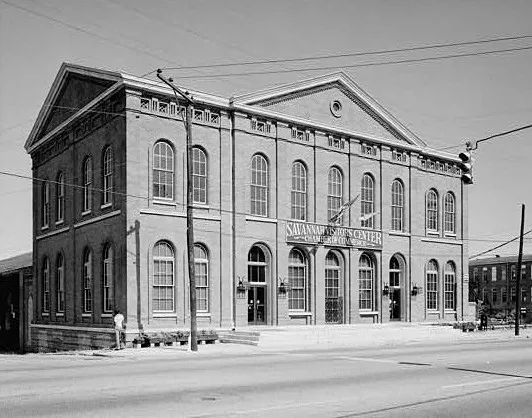
Railroad facilities in Savannah, Georgia, include a brick passenger depot headhouse and a long timber-and-iron trainshed built for the Central of Georgia Railroad. The company, organized in 1833, outgrew its original facilities and planned an integrated complex of passenger and freight depots and shops for building and repairing locomotives and cars. Work on the two-story, nine-bay headhouse began in 1860, stalled during the Civil War, and resumed in 1874, with the building opening in 1876. The trainshed, finished in 1861, was designed by Augustus Schwaab, a German immigrant engineer. Its 26 trusses span 70 feet and combine wood, wrought iron and cast iron, joined by an unusual radial connection more typical of French and German practice. The complex is considered among the earliest comprehensive railroad terminal and shop campuses in the country, and the trainshed is the oldest surviving example of early iron roof construction. The depot was later renovated and houses a chamber of commerce.
Machine-generated summary. This summary was generated by a language model from the official nomination document and has not been reviewed line by line by an editor. It may contain errors. Check the source document before relying on any detail. Source: nomination document (PDF) · catalog entry. Generated October 2026 (model claude-sonnet-5-5, prompt v1.0-2026-10-29).
| Period of significance | 1860-1876 |
|---|---|
| Areas of significance | Industry, Engineering, Transportation, Architecture |
| Acreage | 33.2 |
| Boundary source | NPS cultural-resource GIS polygon |
| Full listing page | Central of Georgia Railroad: Savannah Shops and Terminal Facilities (property record) |
What listing means for this property
This is a historic district. Buildings within its boundary are either contributing (they add to the district's significance) or non-contributing. Owners of contributing income-producing buildings can claim the 20% federal rehabilitation tax credit; homeowners should look at state credits. National Register districts impose no design review by themselves; a local historic district ordinance, if one exists, does (the difference explained).
General information, not legal or tax advice. Rules change; confirm with your State Historic Preservation Office or a qualified adviser.