Cave Spring Commercial Historic District

Why it's listed
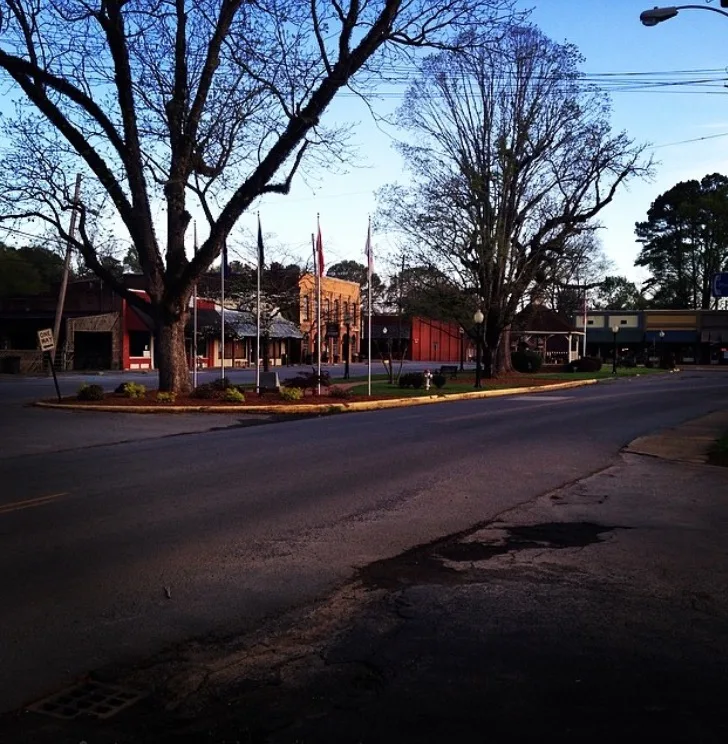
Cave Spring's historic downtown occupies about six acres around the meeting point of Alabama Road, Broad Street, Rome Road, Cedartown Road and Padlock Street. Most of its buildings are one- and two-story brick structures from the late nineteenth and early twentieth centuries, set against the sidewalk with continuous facades. Brick appears in piers, pilasters, stringcourses, parapet panels, segmental arches and corbelled cornices, while some storefronts use wood to imitate cast iron. A wood-framed Greek Revival-era hotel or residence at the south end is noted as an unusual survivor. A small triangular park, formed where country roads meet the town's gridiron streets, anchors the district. Commerce has centered here since the late 1830s or early 1840s, beginning with general stores and expanding after the Civil War to include cobblers, grocers, druggists, blacksmiths, tanneries and hotels. The district was recognized for its architecture, park landscaping, commercial history and its example of unplanned small-town growth at a crossroads. Some buildings have been altered and a few demolished.
Machine-generated summary. This summary was generated by a language model from the official nomination document and has not been reviewed line by line by an editor. It may contain errors. Check the source document before relying on any detail. Source: nomination document (PDF) · catalog entry. Generated October 2026 (model claude-sonnet-5-5, prompt v1.0-2026-10-29).
| Styles | Vernacular late-19th/early-20th-century commercial brick architecture, with one Greek Revival-era wood-framed hotel/residence |
|---|---|
| Areas of significance | Community Planning and Development, Commerce, Architecture |
| Acreage | 6 |
| Boundary source | NPS cultural-resource GIS polygon |
| Full listing page | Cave Spring Commercial Historic District (property record) |
What listing means for this property
This is a historic district. Buildings within its boundary are either contributing (they add to the district's significance) or non-contributing. Owners of contributing income-producing buildings can claim the 20% federal rehabilitation tax credit; homeowners should look at state credits. National Register districts impose no design review by themselves; a local historic district ordinance, if one exists, does (the difference explained).
General information, not legal or tax advice. Rules change; confirm with your State Historic Preservation Office or a qualified adviser.