Carmel Rural Historic District

Why it's listed
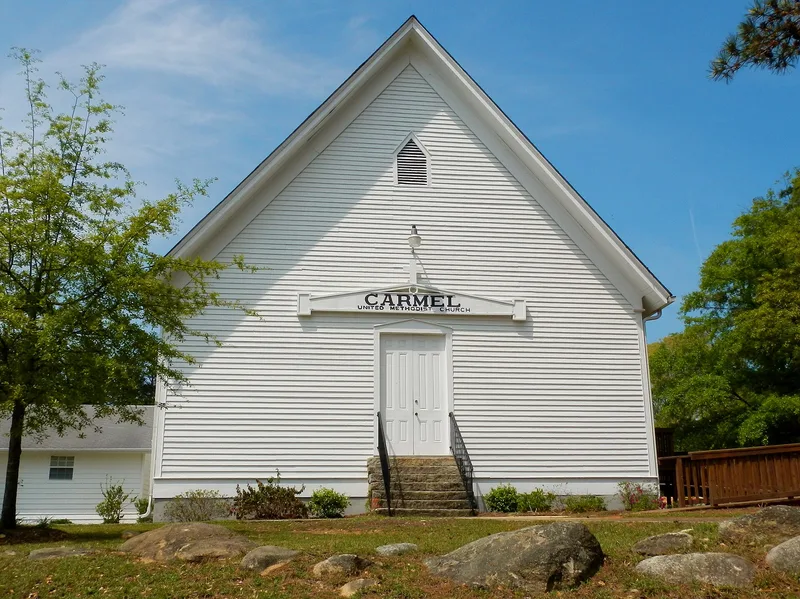
Carmel is a rural community in northeastern Meriwether County, Georgia, centered on the crossroads of State Route 362 and County Road 324. Families from South Carolina's Edgefield District settled the area in the late 1820s and early 1830s, and the district's earliest building is a c.1830 double-pen log house built by Robert Caldwell. Surviving resources include log houses, gable-ell and Georgian cottages, a Queen Anne cottage, a New South cottage created by a 1910 remodel of an 1880 house, and the 1890 Mount Carmel Methodist Church with Gothic Revival elements. Cemeteries, a barn and former fields complete the landscape. Farming shaped the area, from small yeoman farms to larger enslaved-labor operations, and later to lespedeza and pine tree farming in the late 1930s and 1940s. The district was listed for its architecture and its record of settlement and agricultural change, although several buildings, including the post office house and the academy, have been lost.
Machine-generated summary. This summary was generated by a language model from the official nomination document and has not been reviewed line by line by an editor. It may contain errors. Check the source document before relying on any detail. Source: nomination document (PDF) · catalog entry. Generated October 2026 (model claude-sonnet-5-5, prompt v1.0-2026-10-29).
| Period of significance | c.1830-1948 |
|---|---|
| Styles | Saddle-log cabin, Georgian Cottage, Gabled Ell Cottage, Double Pen, New South Cottage, Queen Anne Cottage, Gothic Revival |
| Boundary source | NPS cultural-resource GIS polygon |
| Full listing page | Carmel Rural Historic District (property record) |
What listing means for this property
This is a historic district. Buildings within its boundary are either contributing (they add to the district's significance) or non-contributing. Owners of contributing income-producing buildings can claim the 20% federal rehabilitation tax credit; homeowners should look at state credits. National Register districts impose no design review by themselves; a local historic district ordinance, if one exists, does (the difference explained).
General information, not legal or tax advice. Rules change; confirm with your State Historic Preservation Office or a qualified adviser.