Camp Juliette Low

Why it's listed
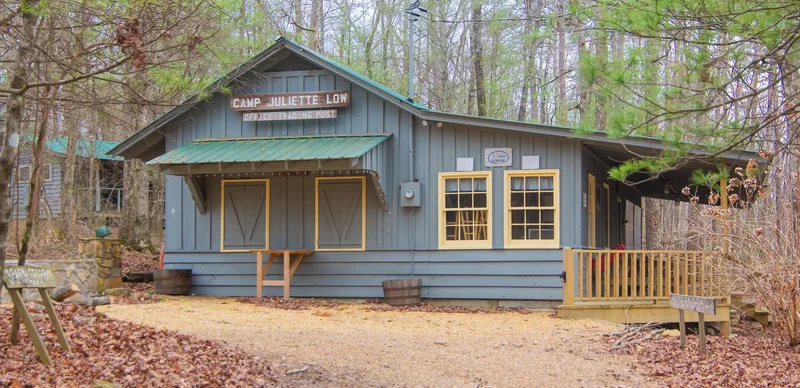
Camp Juliette Low occupies the original ten acres of a former Girl Scout camp two miles north of Cloudland, Georgia, together with a historic swimming hole on the east fork of the Little River. Juliette Gordon Low, who founded Girl Scouts in 1912, chose the site in 1921, marked its boundary trees in 1922 and owned it until 1926, when she transferred it to Camp Juliette Low, Inc. The camp opened on July 1, 1922, as a leadership training school and became one of the earliest Girl Scout training camps in the country. The core includes the 1922 Juliette Low Lodge, a simple stained weatherboard building with an open-trussed ceiling, a fieldstone fireplace and wagon-wheel chandeliers. Natural features such as Soft Rocks, Sunday School Rocks and the Founder's Trees remain central to the grounds. The camp has stayed in use for girls' camping, and its tent areas follow the early layout.
Machine-generated summary. This summary was generated by a language model from the official nomination document and has not been reviewed line by line by an editor. It may contain errors. Check the source document before relying on any detail. Source: nomination document (PDF) · catalog entry. Generated October 2026 (model claude-sonnet-5-5, prompt v1.0-2026-10-29).
| Period of significance | 1922-1938 |
|---|---|
| Styles | Rustic style (Juliette Low Lodge) |
| Areas of significance | Landscape Architecture, Entertainment/Recreation, Architecture, Social History |
| Acreage | 10 |
| Boundary source | NPS cultural-resource GIS polygon |
| Full listing page | Camp Juliette Low (property record) |
What listing means for this property
This is a historic district. Buildings within its boundary are either contributing (they add to the district's significance) or non-contributing. Owners of contributing income-producing buildings can claim the 20% federal rehabilitation tax credit; homeowners should look at state credits. National Register districts impose no design review by themselves; a local historic district ordinance, if one exists, does (the difference explained).
General information, not legal or tax advice. Rules change; confirm with your State Historic Preservation Office or a qualified adviser.