Buena Vista Heights Historic District

Why it's listed
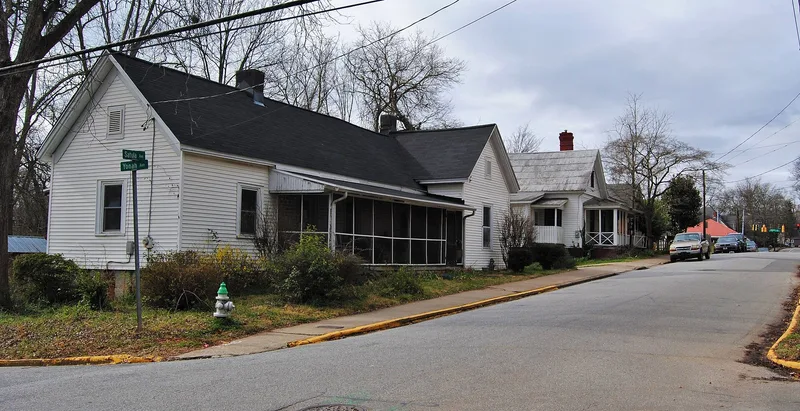
Buena Vista Heights is a residential neighborhood of about 45 acres in northwest Athens, Georgia, planned in 1890 by the Athens Park and Improvement Company as a streetcar suburb. Electric streetcars began serving the area in 1891, allowing middle-class families to live beyond the downtown core. The district keeps its original gridiron street plan, uniform setbacks, small lots, informal front yards, mature hardwood trees and some historic stone and concrete retaining walls. Most of its 82 historic houses are one-story wood-framed dwellings built between 1890 and 1949, with Folk Victorian or Craftsman details. House types include Georgian cottage, central hallway, gabled ell, pyramid cottage and bungalow. It sits beside the Boulevard Historic District, and together with the earlier Cobbham district it illustrates how better transportation extended Athens' residential growth westward. Demolitions beginning in the 1970s and a 1973 tornado removed some houses, and 20 resources are noncontributing, but the district's overall character remains intact.
Machine-generated summary. This summary was generated by a language model from the official nomination document and has not been reviewed line by line by an editor. It may contain errors. Check the source document before relying on any detail. Source: nomination document (PDF) · catalog entry. Generated October 2026 (model claude-sonnet-5-5, prompt v1.0-2026-10-29).
| Period of significance | 1890-1949 |
|---|---|
| Styles | Late 19th and Early 20th Century American Movements/Craftsman; Other/Folk Victorian |
| Areas of significance | Community Planning and Development, Landscape Architecture, Architecture |
| Acreage | 45 |
| Boundary source | NPS cultural-resource GIS polygon |
| Full listing page | Buena Vista Heights Historic District (property record) |
What listing means for this property
This is a historic district. Buildings within its boundary are either contributing (they add to the district's significance) or non-contributing. Owners of contributing income-producing buildings can claim the 20% federal rehabilitation tax credit; homeowners should look at state credits. National Register districts impose no design review by themselves; a local historic district ordinance, if one exists, does (the difference explained).
General information, not legal or tax advice. Rules change; confirm with your State Historic Preservation Office or a qualified adviser.