Brookwood North Historic District

Why it's listed
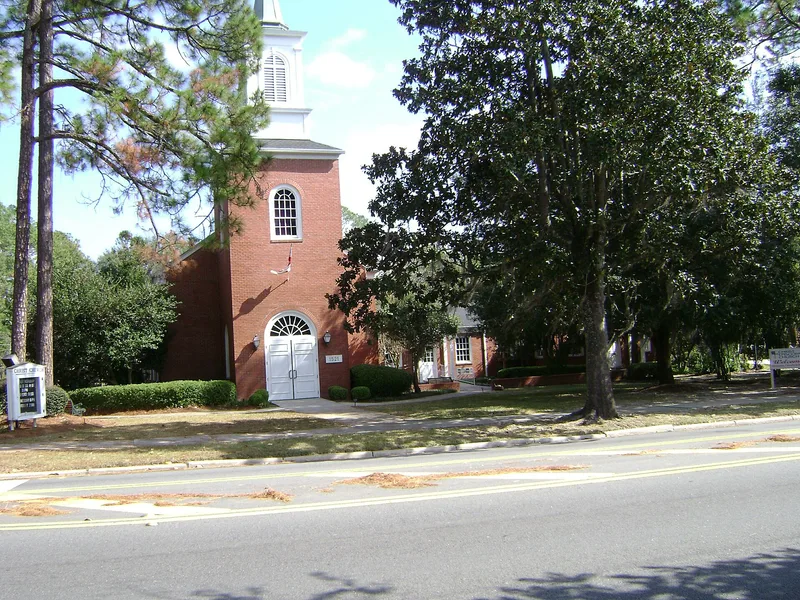
Brookwood North is a residential neighborhood of roughly 175 acres northwest of downtown Valdosta, Georgia. Its growth began in 1898, when streetcar rails were laid along Patterson Street to Pine Park, a fairground that hosted the Georgia State Fair in 1900. Development accelerated after 1918, when the Moore-West Land Company laid out more streets, and continued through the 1940s, helped by the opening of Moody Field. The district holds 218 contributing buildings and Drexel Park, including Queen Anne cottages, bungalows, Craftsman houses and Colonial Revival, English Vernacular Revival, Italian Renaissance Revival and International designs. Local architect Lloyd B. Greer designed at least 48 houses here, along with the 1925 Woman's Club, and Felton Davis designed the 1946 First Christian Church. The district was listed for its architecture and its illustration of streetcar-era community planning, with a period of significance running from 1898 to 1947. Many of the city's business leaders lived here.
Machine-generated summary. This summary was generated by a language model from the official nomination document and has not been reviewed line by line by an editor. It may contain errors. Check the source document before relying on any detail. Source: nomination document (PDF) · catalog entry. Generated October 2026 (model claude-sonnet-5-5, prompt v1.0-2026-10-29).
| Period of significance | 1898 - 1947 |
|---|---|
| Styles | Colonial Revival, English Vernacular Revival, Italian Renaissance Revival, Neoclassical Revival, Craftsman, International, Queen Anne Cottage, Bungalow, Minimal Traditional |
| Areas of significance | Community Planning and Development, Architecture |
| Acreage | 175 |
| Boundary source | NPS cultural-resource GIS polygon |
| Full listing page | Brookwood North Historic District (property record) |
What listing means for this property
This is a historic district. Buildings within its boundary are either contributing (they add to the district's significance) or non-contributing. Owners of contributing income-producing buildings can claim the 20% federal rehabilitation tax credit; homeowners should look at state credits. National Register districts impose no design review by themselves; a local historic district ordinance, if one exists, does (the difference explained).
General information, not legal or tax advice. Rules change; confirm with your State Historic Preservation Office or a qualified adviser.