Brookhaven Historic District

Why it's listed
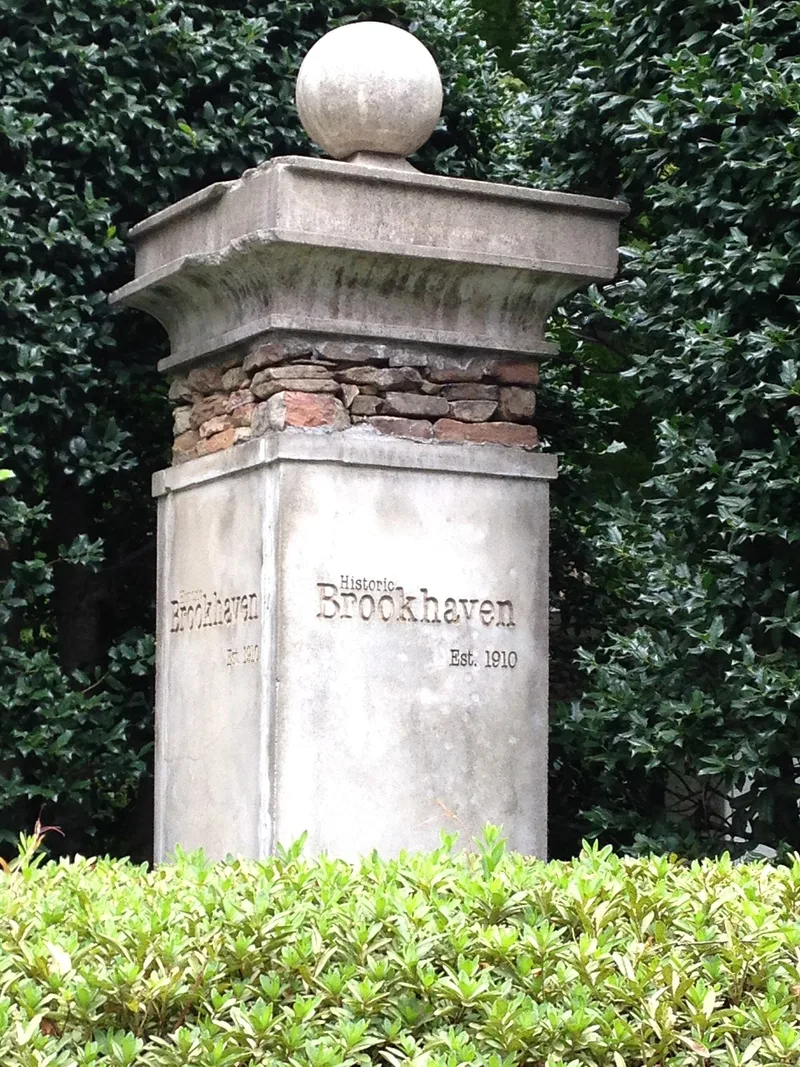
Brookhaven is a suburban neighborhood in Atlanta, covering about 300 acres across Fulton and DeKalb Counties, that was planned around a golf course and country club beginning in 1910. Three subdivisions share curving streets laid over rolling land, with pines and shade trees, a lake, and a wooded ravine park. Houses built between 1910 and 1941 include Colonial and Georgian Revival, Tudor Revival, and Minimal Traditional designs, several by prominent Atlanta architects such as Hal Hentz and Neel Reid. The 1927 Norman Revival clubhouse, designed by Preston Stevens, belongs to the Capital City Club. The district was listed because it appears to be the first golf club community in Georgia and perhaps the Southeast, because its landscaping reflects early twentieth-century suburban planning, and because its architecture and club record the social and recreational life of Atlanta's prosperous residents. Postwar ranch houses make up only a small share of the buildings.
Machine-generated summary. This summary was generated by a language model from the official nomination document and has not been reviewed line by line by an editor. It may contain errors. Check the source document before relying on any detail. Source: nomination document (PDF) · catalog entry. Generated October 2026 (model claude-sonnet-5-5, prompt v1.0-2026-10-29).
| Period of significance | 1910-1941 |
|---|---|
| Styles | Colonial and Georgian Revival, Tudor Revival, Minimal Traditional, Craftsman, Norman Revival (clubhouse), and eclectic styles |
| Areas of significance | Community Planning and Development, Landscape Architecture, Entertainment/Recreation, Architecture, Social History |
| Acreage | 300 |
| Boundary source | NPS cultural-resource GIS polygon |
| Full listing page | Brookhaven Historic District (property record) |
What listing means for this property
This is a historic district. Buildings within its boundary are either contributing (they add to the district's significance) or non-contributing. Owners of contributing income-producing buildings can claim the 20% federal rehabilitation tax credit; homeowners should look at state credits. National Register districts impose no design review by themselves; a local historic district ordinance, if one exists, does (the difference explained).
General information, not legal or tax advice. Rules change; confirm with your State Historic Preservation Office or a qualified adviser.