Broad Street Commercial Historic District

The National Park Service has not published a boundary polygon for this district; the map shows the listed properties inside it and the district's reference point.
Why it's listed
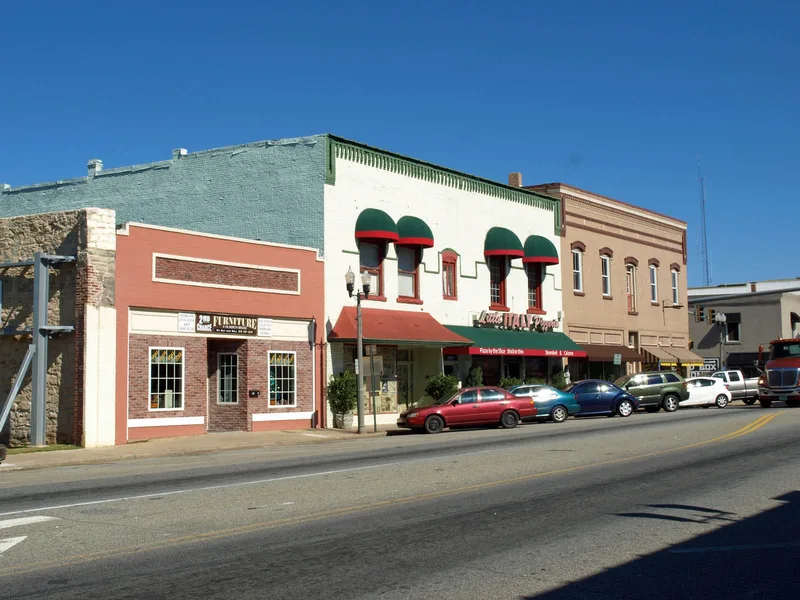
Downtown Winder's Broad Street district covers about four acres, with one full block and parts of three others holding commercial and governmental buildings from the 1870s to the 1930s. Most shops are brick, two stories tall, and modestly detailed, with decorative brickwork and window lintels. Standouts include the Sharpton Opera House, built around 1907 above a business space, the Granite Hotel with its remaining granite second-floor facade, the Neoclassical courthouse completed in 1920, and the small Gothic Revival jail of 1916, both designed by James J. Baldwin. The town grew after two railroads arrived in the 1880s and 1890s, and Barrow County was created in 1914 with Winder as its seat. The courthouse sits on the former site of Dr. W. H. Bush's home, which was moved and later served as a hotel. Later storefront changes and modern infill have altered some blocks, but the core remains an intact historic business center.
Machine-generated summary. This summary was generated by a language model from the official nomination document and has not been reviewed line by line by an editor. It may contain errors. Check the source document before relying on any detail. Source: nomination document (PDF) · catalog entry. Generated October 2026 (model claude-sonnet-5-5, prompt v1.0-2026-10-29).
| Period of significance | 1870s-1930s |
|---|---|
| Styles | Neoclassical (courthouse), Gothic Revival (jail), and modest commercial styles |
| Areas of significance | Commerce, Politics/Government, Architecture |
| Acreage | 4 |
| Boundary source | not published |
| Full listing page | Broad Street Commercial Historic District (property record) |
What listing means for this property
This is a historic district. Buildings within its boundary are either contributing (they add to the district's significance) or non-contributing. Owners of contributing income-producing buildings can claim the 20% federal rehabilitation tax credit; homeowners should look at state credits. National Register districts impose no design review by themselves; a local historic district ordinance, if one exists, does (the difference explained).
General information, not legal or tax advice. Rules change; confirm with your State Historic Preservation Office or a qualified adviser.