Brenau College District

Why it's listed
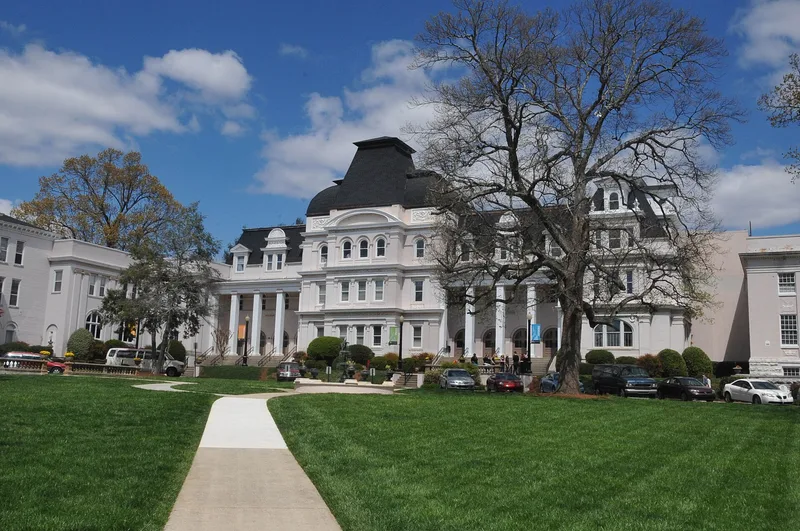
Brenau College District in Gainesville, Georgia, covers about 20 acres of campus buildings and neighboring houses facing a tree-shaded quadrangle. Its oldest building, Wilkes Hall, went up in 1878 for the Baptist Female Seminary, funded by local citizens on land donated by the city. The district includes Queen Anne, Second Empire, Georgian Revival and Beaux-Arts buildings, among them Yonah Hall, Bailey Hall with Pearce Auditorium, Simmons Memorial Library, Overton Hall and Butler Hall. Auditorium interiors survive largely unaltered, including a ceiling fresco from the Class of 1897. Several nearby residences, such as the President's home and the Dixon-Brice House, complement the campus. The district was listed for its role in educating women, its association with educators Azor Van Hoose and Haywood Pearce, who guided the school's growth, and its connection to Gainesville's development. Later alterations in the 1940s and 1950s left the main architectural elements intact.
Machine-generated summary. This summary was generated by a language model from the official nomination document and has not been reviewed line by line by an editor. It may contain errors. Check the source document before relying on any detail. Source: nomination document (PDF) · catalog entry. Generated October 2026 (model claude-sonnet-5-5, prompt v1.0-2026-10-29).
| Period of significance | 1900- |
|---|---|
| Styles | Queen Anne, Second Empire, Georgian Revival, Neo-Georgian Revival, Beaux-Arts Classical and Neo-Classic Revival |
| Areas of significance | Education, Architecture, Performing Arts |
| Acreage | 20.2 |
| Boundary source | NPS cultural-resource GIS polygon |
| Full listing page | Brenau College District (property record) |
What listing means for this property
This is a historic district. Buildings within its boundary are either contributing (they add to the district's significance) or non-contributing. Owners of contributing income-producing buildings can claim the 20% federal rehabilitation tax credit; homeowners should look at state credits. National Register districts impose no design review by themselves; a local historic district ordinance, if one exists, does (the difference explained).
General information, not legal or tax advice. Rules change; confirm with your State Historic Preservation Office or a qualified adviser.