Bloomfield Street Historic District

Why it's listed
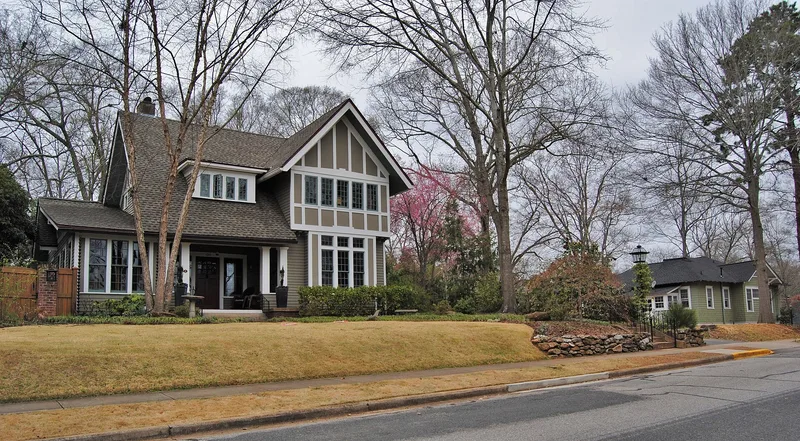
Bloomfield Street Historic District is a roughly 30-acre residential neighborhood in Athens, Georgia, next to the University of Georgia campus. Its small lots hold modest wood-framed houses built from the 1890s to the 1930s, in Victorian Eclectic, American Foursquare, Bungalow and Craftsman styles, with some Tudor Revival detailing. Fred Orr, a local architect, designed several Craftsman houses on Mell Street. The Calvin Parr House, an elaborately detailed Victorian cottage, is also individually listed. Development began in the late 1880s, when industrialist Robert L. Bloomfield subdivided land along the east side of Bloomfield Street. Other sections were laid out in 1890 and 1912, and the area grew piecemeal, helped by the nearby Milledge Avenue streetcar line. Merchants, tradesmen and university professors lived here. Informal front-yard landscaping, shade trees and a small triangular green give the district a park-like setting. It was listed for its architecture, landscape design, planning history and the Bloomfield connection.
Machine-generated summary. This summary was generated by a language model from the official nomination document and has not been reviewed line by line by an editor. It may contain errors. Check the source document before relying on any detail. Source: nomination document (PDF) · catalog entry. Generated October 2026 (model claude-sonnet-5-5, prompt v1.0-2026-10-29).
| Period of significance | 1885-1935 (revised in 1990 supplementary information; the original form gave 1880s-1930s) |
|---|---|
| Styles | Victorian Eclectic, American Foursquare, Bungalow/Craftsman, with Tudor Revival and Neoclassical detailing |
| Areas of significance | Community Planning and Development, Landscape Architecture, Architecture, Social History |
| Acreage | 30 |
| Boundary source | NPS cultural-resource GIS polygon |
| Full listing page | Bloomfield Street Historic District (property record) |
What listing means for this property
This is a historic district. Buildings within its boundary are either contributing (they add to the district's significance) or non-contributing. Owners of contributing income-producing buildings can claim the 20% federal rehabilitation tax credit; homeowners should look at state credits. National Register districts impose no design review by themselves; a local historic district ordinance, if one exists, does (the difference explained).
General information, not legal or tax advice. Rules change; confirm with your State Historic Preservation Office or a qualified adviser.