Bethlehem Historic District

Why it's listed
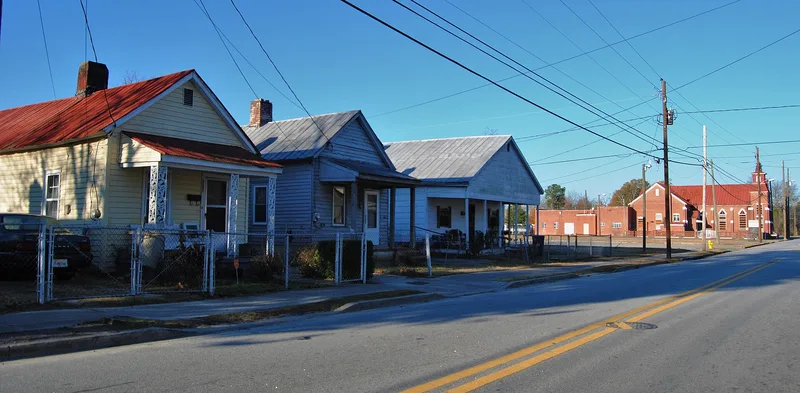
Bethlehem is a densely built African-American neighborhood in southern Augusta, Georgia, laid out on a street grid beginning in the late 1870s and hemmed in by railroad lines, roads and industry. Most of its 626 historic buildings went up between 1890 and 1930. Early residents worked in nearby brickyards, rail yards and mills and lived in small wood-framed houses, with shotgun houses the most common type. A rare double shotgun survives on Wrightsboro Road. After a 1913 city ordinance imposed racial zoning, middle-class families also moved in and built larger houses, such as the two-story Russell House built for a prominent Black physician. Corner groceries, a shoe repair shop, a former Pure Oil station and the Red and Black Inn show the neighborhood's self-sufficiency. Several churches, the 1912 Bethlehem Community Center and cotton compresses complete the district. Swept yards, a vernacular African-American landscape feature, add to its character. The district was listed for its architecture, ethnic heritage, community planning and landscape.
Machine-generated summary. This summary was generated by a language model from the official nomination document and has not been reviewed line by line by an editor. It may contain errors. Check the source document before relying on any detail. Source: nomination document (PDF) · catalog entry. Generated October 2026 (model claude-sonnet-5-5, prompt v1.0-2026-10-29).
| Period of significance | c.1870s-1947 |
|---|---|
| Styles | Colonial Revival, Classical Revival/Neo-Classical Revival, Tudor Revival, Bungalow/Craftsman, Georgian cottage, Central Hall, Shotgun, Gabled ell cottage; Folk Victorian is the most pervasive style |
| Areas of significance | Architecture, Black, Community Planning and Development, Landscape Architecture |
| Acreage | 250 |
| Boundary source | NPS cultural-resource GIS polygon |
| Full listing page | Bethlehem Historic District (property record) |
What listing means for this property
This is a historic district. Buildings within its boundary are either contributing (they add to the district's significance) or non-contributing. Owners of contributing income-producing buildings can claim the 20% federal rehabilitation tax credit; homeowners should look at state credits. National Register districts impose no design review by themselves; a local historic district ordinance, if one exists, does (the difference explained).
General information, not legal or tax advice. Rules change; confirm with your State Historic Preservation Office or a qualified adviser.