Athens Warehouse Historic District

Why it's listed
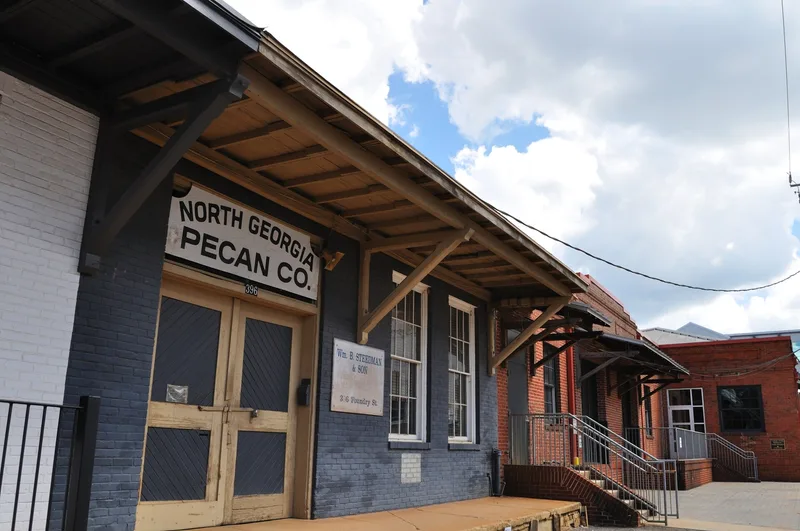
Athens Warehouse Historic District occupies a sloping hillside east of downtown Athens, Georgia, running down toward the Oconee River. It holds 25 contributing buildings, mostly one- and two-story brick warehouses built in the early twentieth century, along with a few commercial buildings and two freight depots, the Georgia Railroad Depot and the Seaboard Depot. Two groups of railroad tracks cross the district and leave large open rail yards. The buildings have little ornament, though the Coker Cotton Warehouse has a pedimented brick cornice and drip moldings, and the so-called Potters House has a Greek Revival-inspired porch. The district was recognized as a typical warehouse area of a small Georgia city. It served storage, shipping and wholesale trade, including cotton and fertilizer warehouses and small industries such as a foundry and an oil refinery. Its rail connections, beginning with the Georgia Railroad in 1841, tied Athens to regional trade. The period of significance runs from 1888 to 1926.
Machine-generated summary. This summary was generated by a language model from the official nomination document and has not been reviewed line by line by an editor. It may contain errors. Check the source document before relying on any detail. Source: nomination document (PDF) · catalog entry. Generated October 2026 (model claude-sonnet-5-5, prompt v1.0-2026-10-29).
| Period of significance | 1888-1926 |
|---|---|
| Styles | Late 19th and early 20th century American movements: commercial style |
| Areas of significance | Commerce, Transportation, Architecture |
| Acreage | 35 |
| Boundary source | NPS cultural-resource GIS polygon |
| Full listing page | Athens Warehouse Historic District (property record) |
What listing means for this property
This is a historic district. Buildings within its boundary are either contributing (they add to the district's significance) or non-contributing. Owners of contributing income-producing buildings can claim the 20% federal rehabilitation tax credit; homeowners should look at state credits. National Register districts impose no design review by themselves; a local historic district ordinance, if one exists, does (the difference explained).
General information, not legal or tax advice. Rules change; confirm with your State Historic Preservation Office or a qualified adviser.