Athens-Candler-Church Street Historic District

Why it's listed
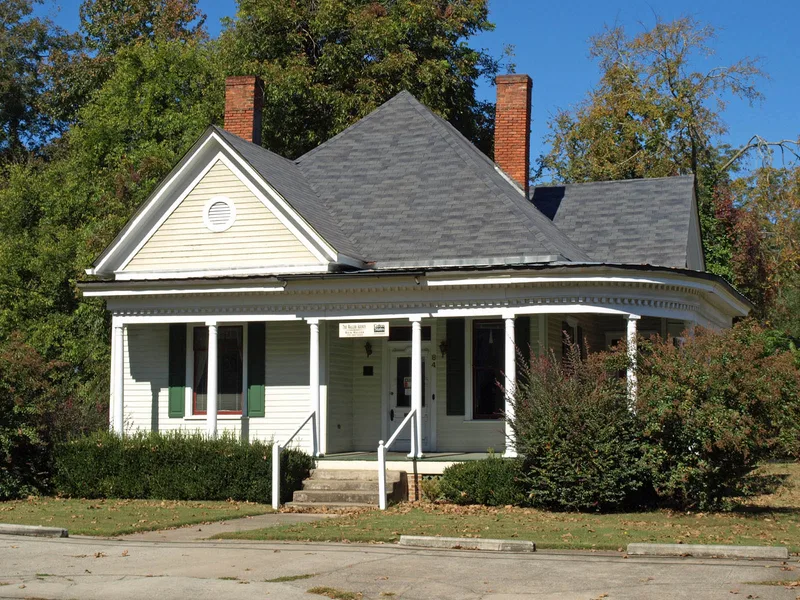
This 66-acre residential district lies northwest of downtown Winder, Georgia, around Athens, Candler, Church and Center Streets and Midland Avenue. Its one- and two-story brick and wood houses date mostly from the late 19th and early 20th centuries and show Folk Victorian, Queen Anne, Colonial Revival, Neoclassical, Georgian Revival and Craftsman styles. Notable examples include the Neoclassical Jackson-Johns House on Candler Street and the Colonial Revival McCants-Miller House, built around 1897. Two churches are also included: the 1904 Methodist church, now a restaurant, and the 1895 Presbyterian church, now a Baptist church. The Winder Woman's Club building, from about 1931, stands at the district's southeastern edge. The district was recognized for its architecture, its churches, the Woman's Club founded in 1920, and its ties to early Winder merchants and residents, including the first woman to graduate from the University of Georgia Law School. The period of significance runs from 1880 to 1935.
Machine-generated summary. This summary was generated by a language model from the official nomination document and has not been reviewed line by line by an editor. It may contain errors. Check the source document before relying on any detail. Source: nomination document (PDF) · catalog entry. Generated October 2026 (model claude-sonnet-5-5, prompt v1.0-2026-10-29).
| Period of significance | 1880-1935 |
|---|---|
| Styles | Folk Victorian, Neoclassical, Georgian Revival, Queen Anne, Colonial Revival, Bungalow/Craftsman |
| Areas of significance | Architecture, Social History |
| Acreage | 66 |
| Boundary source | NPS cultural-resource GIS polygon |
| Full listing page | Athens-Candler-Church Street Historic District (property record) |
What listing means for this property
This is a historic district. Buildings within its boundary are either contributing (they add to the district's significance) or non-contributing. Owners of contributing income-producing buildings can claim the 20% federal rehabilitation tax credit; homeowners should look at state credits. National Register districts impose no design review by themselves; a local historic district ordinance, if one exists, does (the difference explained).
General information, not legal or tax advice. Rules change; confirm with your State Historic Preservation Office or a qualified adviser.