Ardsley Park-Chatham Crescent Historic District

Why it's listed
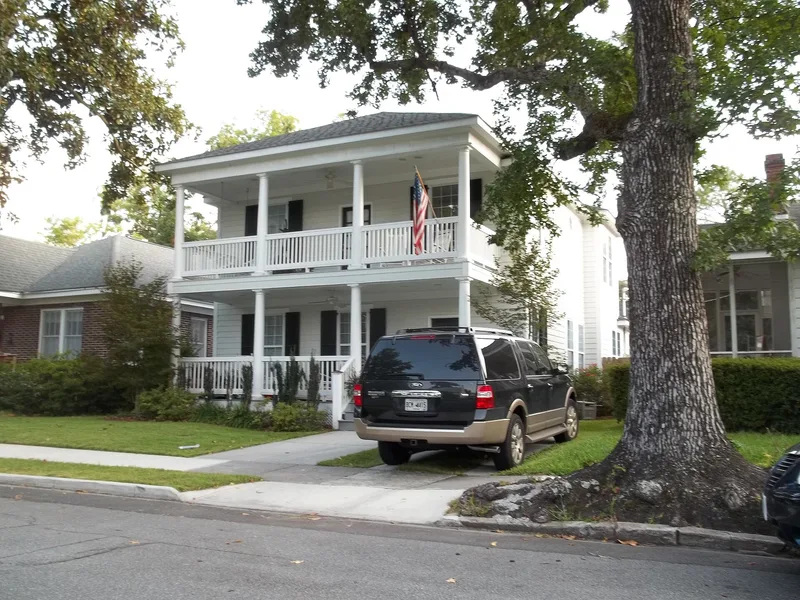
Ardsley Park and Chatham Crescent are two adjoining planned neighborhoods in Savannah, laid out from 1909-1910 on swampy land beyond the edge of the city. Ardsley Park follows a gridiron with landscaped squares, recalling Oglethorpe's 1733 plan for Savannah. Chatham Crescent, designed by Henri Bignault, uses a grand mall, crescent-shaped avenues and small circular parks in a Beaux Arts-influenced City Beautiful layout. The Berckmans brothers of Fruitland Nursery in Augusta carried out the landscaping of the public spaces. Of almost 1,200 houses, most are wood-framed single-family homes built between 1910 and 1935, representing nearly every popular Revival style as well as many Bungalow/Craftsman examples. Savannah High School, built in 1937 as a Depression-era federal project, anchors Chatham Crescent. The district was recognized for its planning, landscape design, architecture and ties to Savannah's developers and civic leaders, including Harry H. Lattimore, William Lattimore and Harvey Granger.
Machine-generated summary. This summary was generated by a language model from the official nomination document and has not been reviewed line by line by an editor. It may contain errors. Check the source document before relying on any detail. Source: nomination document (PDF) · catalog entry. Generated October 2026 (model claude-sonnet-5-5, prompt v1.0-2026-10-29).
| Period of significance | 1909-1935 |
|---|---|
| Styles | Neoclassical, Georgian and Colonial Revival, Dutch Colonial, Tudor Revival, English Cottage, Bungalow/Craftsman, with Spanish, Mediterranean and Prairie influences |
| Areas of significance | Community Planning and Development, Landscape Architecture, Architecture, Social History |
| Acreage | 400 |
| Boundary source | NPS cultural-resource GIS polygon |
| Full listing page | Ardsley Park-Chatham Crescent Historic District (property record) |
What listing means for this property
This is a historic district. Buildings within its boundary are either contributing (they add to the district's significance) or non-contributing. Owners of contributing income-producing buildings can claim the 20% federal rehabilitation tax credit; homeowners should look at state credits. National Register districts impose no design review by themselves; a local historic district ordinance, if one exists, does (the difference explained).
General information, not legal or tax advice. Rules change; confirm with your State Historic Preservation Office or a qualified adviser.