Americus Historic District

Why it's listed
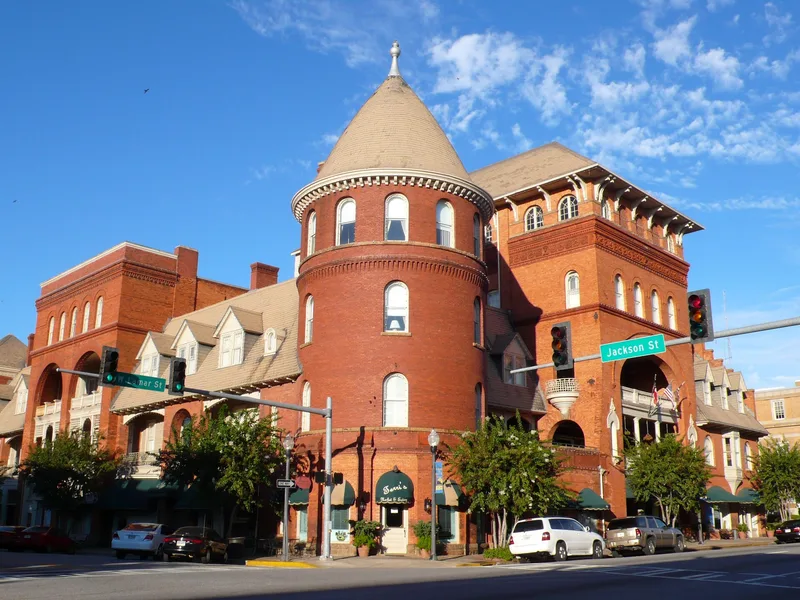
Americus, Georgia, preserves a broad cross-section of its commercial and residential past in this district of about 250 acres centered on Lee Street. It takes in the railroad yard and cotton warehouses, the downtown blocks along Forsyth and Lamar Streets, and leafy residential streets including Church, Jackson, College and Rees Park. Landmarks include the 1889 Harrold Warehouse, Glover's Opera House of 1881, the 1892 Windsor Hotel, the 1884 Presbyterian Church, and a Carnegie-funded library. Founded in 1831, Americus became a trading center for cotton growers, and its citizens secured the Southwest Railroad's route through town in 1854. After a depression following the Civil War, the 1890s brought a building boom in both business and housing. The result is a mostly Victorian townscape, with Eastlake mansions, Shingle Style homes, Gothic cottages, Classical Revival houses and two ante-bellum cottages, illustrating the prosperity of a merchant community.
Machine-generated summary. This summary was generated by a language model from the official nomination document and has not been reviewed line by line by an editor. It may contain errors. Check the source document before relying on any detail. Source: nomination document (PDF) · catalog entry. Generated October 2026 (model claude-sonnet-5-5, prompt v1.0-2026-10-29).
| Period of significance | 1800-1899, 1900- |
|---|---|
| Styles | Predominantly Victorian, with Romanesque, Stick Style, Shingle Style, Eastlake, Gothic cottage, Neo-Classical and Classical Revival examples |
| Areas of significance | Commerce, Transportation, Architecture |
| Acreage | 250 |
| Boundary source | NPS cultural-resource GIS polygon |
| Full listing page | Americus Historic District (property record) |
What listing means for this property
This is a historic district. Buildings within its boundary are either contributing (they add to the district's significance) or non-contributing. Owners of contributing income-producing buildings can claim the 20% federal rehabilitation tax credit; homeowners should look at state credits. National Register districts impose no design review by themselves; a local historic district ordinance, if one exists, does (the difference explained).
General information, not legal or tax advice. Rules change; confirm with your State Historic Preservation Office or a qualified adviser.