Albany Railroad Depot Historic District

Why it's listed
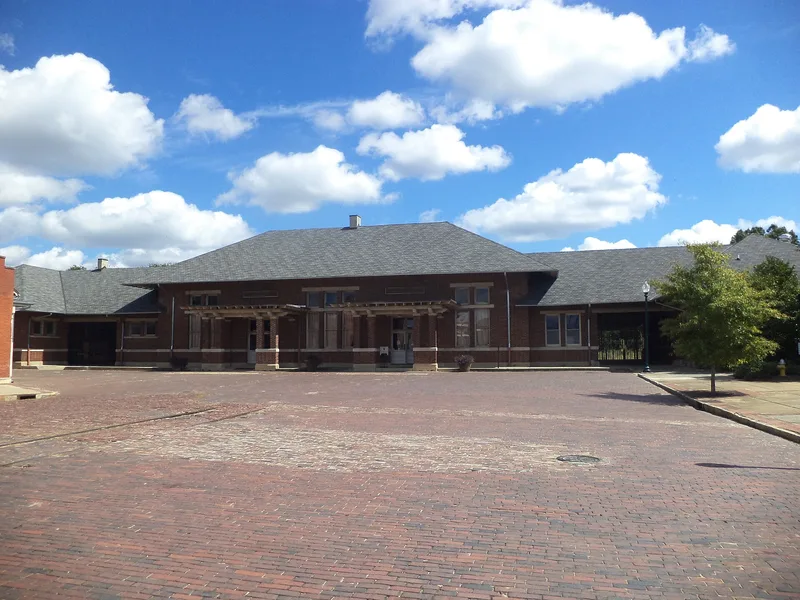
Albany's historic railroad depot occupies about three acres beside the Flint River, two blocks northeast of the central business district. The district holds three railroad buildings and a brick street. The 1857 depot is a long, low brick building with massive timber roof trusses, bracketed eaves and built-in ventilators, described as a rare and relatively intact antebellum station in Georgia. The 1913 Union Depot is a dark-red brick Prairie style station with broad hipped roofs and two porte-cochere entrances. A World War I-era Railway Express Agency building with Spanish Mission parapets stands between them, and a 1913 brick street with streetcar tracks leads to the depot. The complex served as Albany's center for freight and passengers for more than a century. In the early twentieth century it handled seven rail lines and thirty-five daily trains. Passenger service ended in 1971, and the buildings were later acquired for a cultural center with a museum and planned planetarium.
Machine-generated summary. This summary was generated by a language model from the official nomination document and has not been reviewed line by line by an editor. It may contain errors. Check the source document before relying on any detail. Source: nomination document (PDF) · catalog entry. Generated October 2026 (model claude-sonnet-5-5, prompt v1.0-2026-10-29).
| Period of significance | 1900- (specific dates 1857, 1913) |
|---|---|
| Styles | Prairie style (1913 Union Depot); Spanish Mission styling (Railway Express Agency building) |
| Areas of significance | Commerce, Transportation, Architecture |
| Acreage | 3 |
| Boundary source | NPS cultural-resource GIS polygon |
| Full listing page | Albany Railroad Depot Historic District (property record) |
What listing means for this property
This is a historic district. Buildings within its boundary are either contributing (they add to the district's significance) or non-contributing. Owners of contributing income-producing buildings can claim the 20% federal rehabilitation tax credit; homeowners should look at state credits. National Register districts impose no design review by themselves; a local historic district ordinance, if one exists, does (the difference explained).
General information, not legal or tax advice. Rules change; confirm with your State Historic Preservation Office or a qualified adviser.