Yerba Buena Island Lighthouse

The National Park Service has not published a boundary polygon for this district; the map shows the listed properties inside it and the district's reference point.
Why it's listed
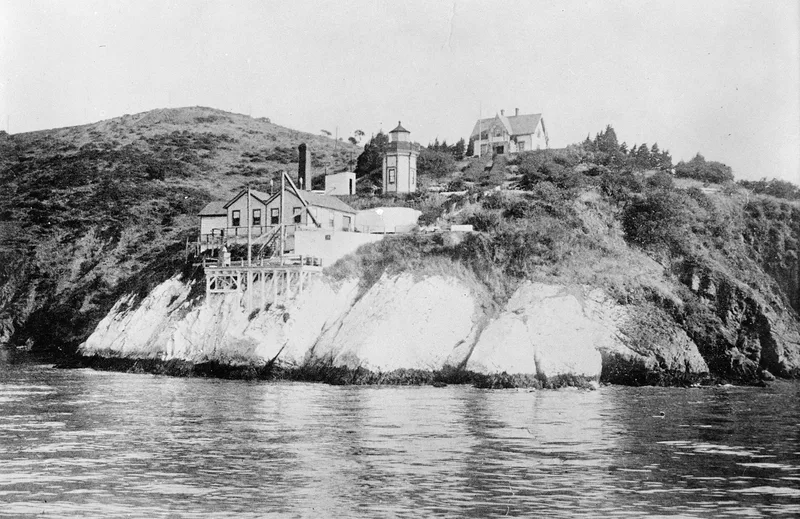
Yerba Buena Island Light Station sits on the southern slope of an island in the middle of San Francisco Bay. It includes an octagonal wood-frame lighthouse tower dated 1875, a fog-signal building, a Gothic Keeper's quarters built in 1873 and a concrete oil house from 1907. The tower carries Eastlake scrollwork and still holds its original 5th order Fresnel lens and a rare pear-shaped smoke chimney. It is the only freestanding wood lighthouse tower still operating in California. The station was established because ferry and railroad traffic between San Francisco and Oakland made the island a navigation hazard, especially in fog. The Keeper's quarters, originally a duplex, is one of only two surviving Gothic-style keeper's dwellings in the state. No modern buildings intrude on the complex. It was listed for its role in California maritime transportation and for its well-preserved late 19th century design.
Machine-generated summary. This summary was generated by a language model from the official nomination document and has not been reviewed line by line by an editor. It may contain errors. Check the source document before relying on any detail. Source: nomination document (PDF) · catalog entry. Generated October 2026 (model claude-sonnet-5-5, prompt v1.0-2026-10-29).
| Period of significance | 1875-1940 |
|---|---|
| Styles | Stick/Eastlake; Late Gothic Revival |
| Areas of significance | Commerce, Transportation, Architecture, Maritime History |
| Acreage | 2.7 |
| Boundary source | not published |
| Full listing page | Yerba Buena Island Lighthouse (property record) |
What listing means for this property
This is a historic district. Buildings within its boundary are either contributing (they add to the district's significance) or non-contributing. Owners of contributing income-producing buildings can claim the 20% federal rehabilitation tax credit; homeowners should look at state credits. National Register districts impose no design review by themselves; a local historic district ordinance, if one exists, does (the difference explained).
General information, not legal or tax advice. Rules change; confirm with your State Historic Preservation Office or a qualified adviser.