Yamashiro Historic District

The National Park Service has not published a boundary polygon for this district; the map shows the listed properties inside it and the district's reference point.
Why it's listed
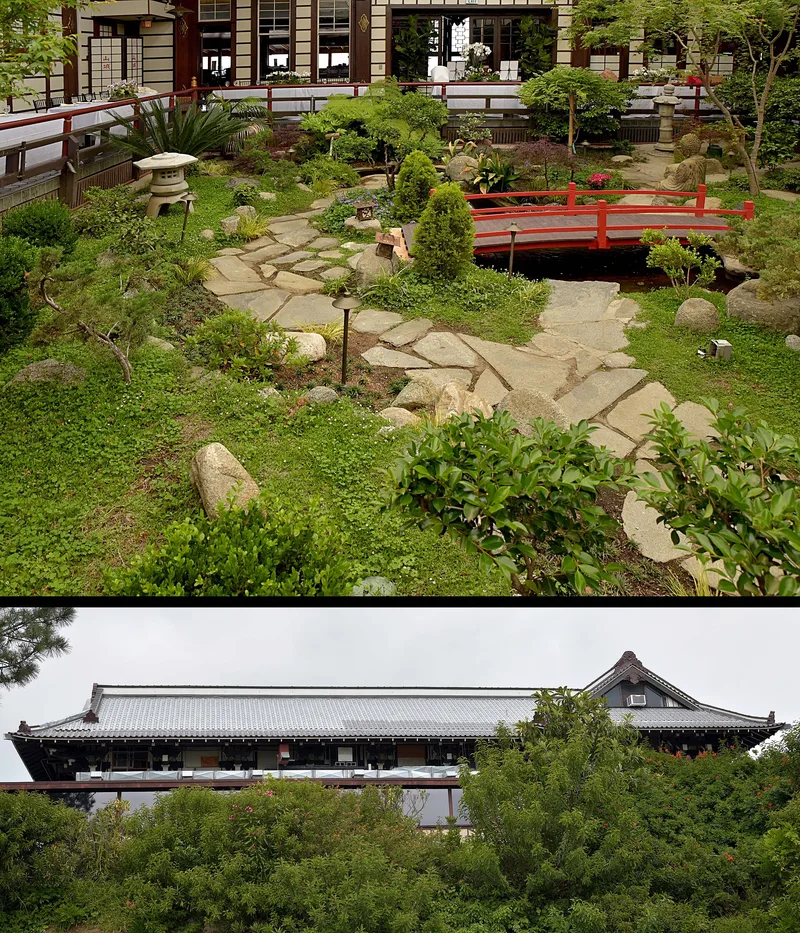
Yamashiro is a seven-acre hillside estate above Hollywood Boulevard in Los Angeles. German-born cotton merchants Adolph and Eugene Bernheimer, who collected Asian art, bought the land in 1913 and commissioned New York architect Franklin M. Small to design a villa based on seventeenth-century Japanese traditions. Completed in 1914, it sits within concentric terraced gardens laid out by Adolph Bernheimer and landscaper Andreas C. Orum. The district includes nine contributing resources: the Main House, Garage, Groundskeeper's Cottage, Menagerie House, a hotel complex built in the early 1950s, the gardens, and three garden structures, including a South Gatehouse, Resting Pavilion and a Japanese pagoda over 600 years old. The property was closed to the public during World War II, later used as a boarding school, then converted to a restaurant and hotel after 1948. It was listed for its architecture, as a prominent example of orientalist, fantasy-influenced design in Hollywood, and it retains much of its original character despite alterations.
Machine-generated summary. This summary was generated by a language model from the official nomination document and has not been reviewed line by line by an editor. It may contain errors. Check the source document before relying on any detail. Source: nomination document (PDF) · catalog entry. Generated October 2026 (model claude-sonnet-5-5, prompt v1.0-2026-10-29).
| Styles | Late 19th and 20th Century Revivals/Asian |
|---|---|
| Areas of significance | Architecture, Social History |
| Acreage | 7 |
| Boundary source | not published |
| Full listing page | Yamashiro Historic District (property record) |
What listing means for this property
This is a historic district. Buildings within its boundary are either contributing (they add to the district's significance) or non-contributing. Owners of contributing income-producing buildings can claim the 20% federal rehabilitation tax credit; homeowners should look at state credits. National Register districts impose no design review by themselves; a local historic district ordinance, if one exists, does (the difference explained).
General information, not legal or tax advice. Rules change; confirm with your State Historic Preservation Office or a qualified adviser.