Women's Improvement Club of Hueneme

The National Park Service has not published a boundary polygon for this district; the map shows the listed properties inside it and the district's reference point.
Why it's listed
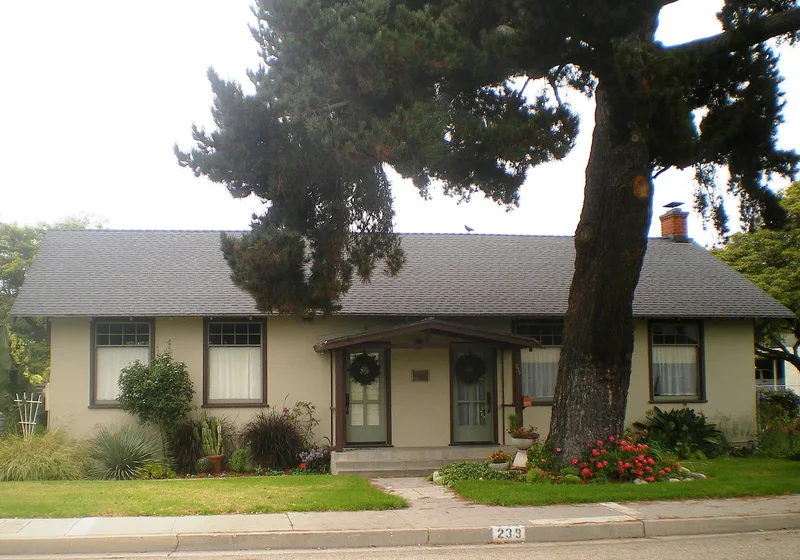
Built in 1915 on Scott Street in Port Hueneme, this stucco bungalow served as both clubhouse and library for the Women's Improvement Club of Hueneme. Mary Bard, wife of town founder Thomas Bard, donated the land and building, and the deed passed to the club in September 1915. The low-pitched gable roof, exposed rafters, knee brackets and multi-paned windows mark it as one of the few remaining California bungalows in the city that has kept its integrity. A tennis court behind the building is counted as part of the property. The club formed in 1909 to improve a declining town and to start a library. Members cleaned lots and streets, planted sycamores, built benches and a tennis court, and supported Red Cross work in wartime. The library used the building until a city library opened in 1935. The clubhouse is the oldest women's clubhouse in Ventura County and remains in use. It was designated Ventura County Landmark #19 in 1971.
Machine-generated summary. This summary was generated by a language model from the official nomination document and has not been reviewed line by line by an editor. It may contain errors. Check the source document before relying on any detail. Source: nomination document (PDF) · catalog entry. Generated October 2026 (model claude-sonnet-5-5, prompt v1.0-2026-10-29).
| Period of significance | 1915-1935 |
|---|---|
| Styles | Bungalow/Craftsman |
| Areas of significance | Education, Social History |
| Acreage | 0.9 |
| Boundary source | not published |
| Full listing page | Women's Improvement Club of Hueneme (property record) |
What listing means for this property
This is a historic district. Buildings within its boundary are either contributing (they add to the district's significance) or non-contributing. Owners of contributing income-producing buildings can claim the 20% federal rehabilitation tax credit; homeowners should look at state credits. National Register districts impose no design review by themselves; a local historic district ordinance, if one exists, does (the difference explained).
General information, not legal or tax advice. Rules change; confirm with your State Historic Preservation Office or a qualified adviser.