Witter, Edwin, Ranch

Why it's listed
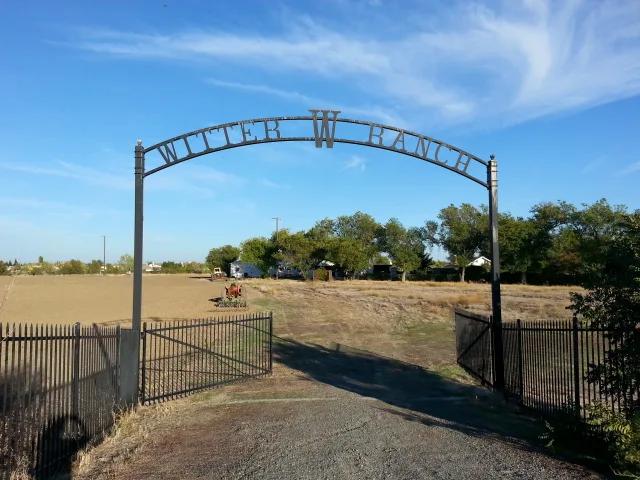
Set among farm fields near a bend in the West Drainage Canal, this working ranch in Sacramento's Natomas District includes a 1934 residence, an early farmhouse, a tank house, a foreman's cottage, a barn and a later equipment shed. The ranch began between 1918 and 1921, after reclamation work by the Natomas Company turned swampland into farmland. Its first owner, O. M. Saylor, built the barn, tank house and farmhouse. In 1933 Edwin Witter, a co-founder of the Dean Witter brokerage, bought the property. The one-story, U-shaped residence, designed by the Bay Area firm Williams and Wastell, shows Spanish and Mediterranean influences, with a long screened porch and exposed beams. The nomination ranks it as unusually refined for a working ranch. The property was recognized for its link to the large reclamation project, for Witter's agricultural and civic leadership, and for its architecture. Its period of significance runs from 1918 to 1940.
Machine-generated summary. This summary was generated by a language model from the official nomination document and has not been reviewed line by line by an editor. It may contain errors. Check the source document before relying on any detail. Source: nomination document (PDF) · catalog entry. Generated October 2026 (model claude-sonnet-5-5, prompt v1.0-2026-10-29).
| Period of significance | 1918-1940 |
|---|---|
| Styles | Late 19th and 20th Century Revivals: Spanish/Mediterranean Revival, with minor Craftsman influences on the older ranch buildings |
| Areas of significance | Community Planning and Development, Agriculture, Architecture |
| Acreage | 12 |
| Boundary source | NPS cultural-resource GIS polygon |
| Full listing page | Witter, Edwin, Ranch (property record) |
What listing means for this property
This is a historic district. Buildings within its boundary are either contributing (they add to the district's significance) or non-contributing. Owners of contributing income-producing buildings can claim the 20% federal rehabilitation tax credit; homeowners should look at state credits. National Register districts impose no design review by themselves; a local historic district ordinance, if one exists, does (the difference explained).
General information, not legal or tax advice. Rules change; confirm with your State Historic Preservation Office or a qualified adviser.