Wilton Historic District

Why it's listed
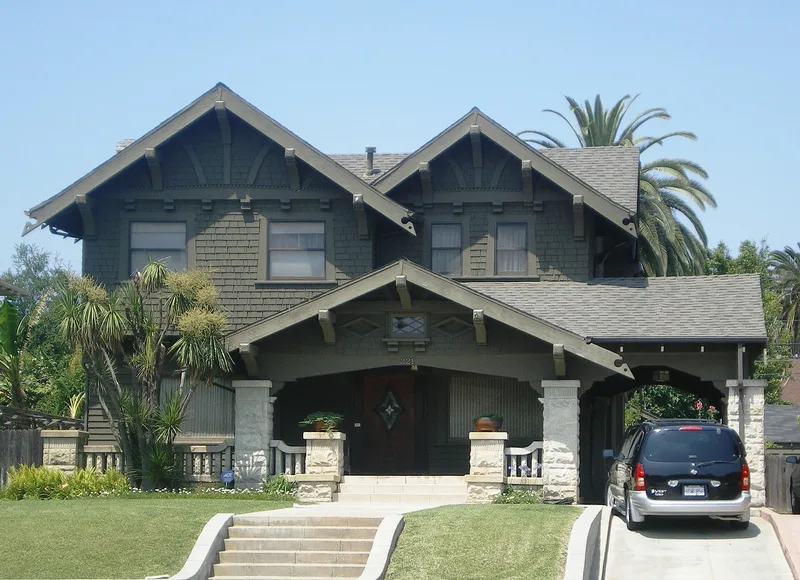
Wilton Historic District is a compact residential neighborhood in Los Angeles along S. Wilton Place, S. Wilton Drive and S. Ridgewood Place, between First and Third Streets. It contains 63 single-family houses dating from 1907 to 1925, along with two built in the mid-1930s. About half are two-story Craftsman bungalows, and most of the rest are Colonial Revival bungalows. Other houses show Mission, Tudor, Dutch Colonial, Classical Revival and Prairie influences. Architects named include Frank M. Tyler, H. J. Knauer and H. H. Whiteley, and several houses were built by contractors or owners. The neighborhood was planned as an upper-middle-class area on the northwestern edge of the city. About half of the houses predate World War I, and nearly all the rest followed within a decade after it. Houses sit on larger than normal lots raised above the street, and no significant alterations have changed the buildings or the area, giving the district an unusually cohesive appearance.
Machine-generated summary. This summary was generated by a language model from the official nomination document and has not been reviewed line by line by an editor. It may contain errors. Check the source document before relying on any detail. Source: nomination document (PDF) · catalog entry. Generated October 2026 (model claude-sonnet-5-5, prompt v1.0-2026-10-29).
| Period of significance | 1907-1925 |
|---|---|
| Styles | Craftsman bungalows and Colonial Revival, with Mission, Tudor, Dutch Colonial and other revival styles |
| Areas of significance | Architecture |
| Acreage | 15.6 |
| Boundary source | NPS cultural-resource GIS polygon |
| Full listing page | Wilton Historic District (property record) |
What listing means for this property
This is a historic district. Buildings within its boundary are either contributing (they add to the district's significance) or non-contributing. Owners of contributing income-producing buildings can claim the 20% federal rehabilitation tax credit; homeowners should look at state credits. National Register districts impose no design review by themselves; a local historic district ordinance, if one exists, does (the difference explained).
General information, not legal or tax advice. Rules change; confirm with your State Historic Preservation Office or a qualified adviser.