West Miner Street-Third Street Historic District

Why it's listed
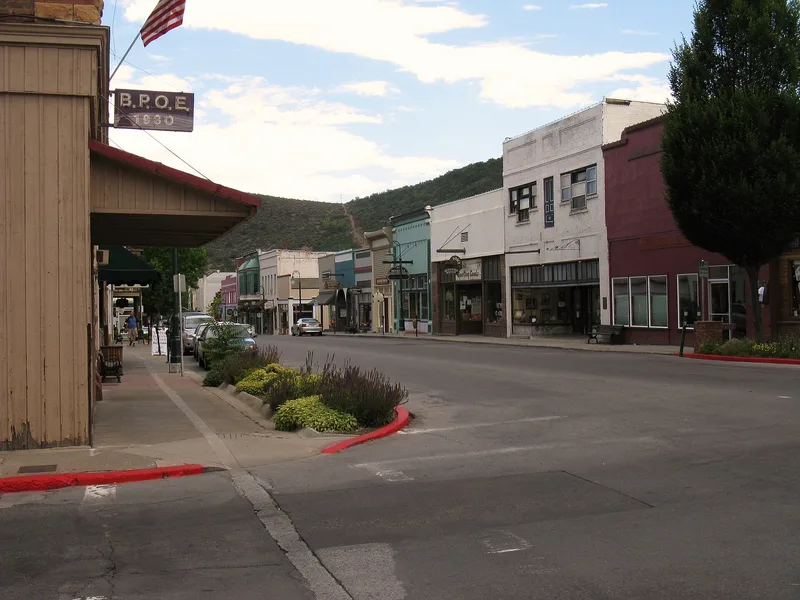
Yreka's West Miner Street-Third Street district pairs a commercial core with the neighborhood where its merchants and professionals lived. Three blocks of Miner Street hold brick row buildings with shared bearing walls, Italianate detailing and squared-off false fronts, dating mostly from 1854 to 1900. Many on the south side were rebuilt after the fire of 1871. Four blocks of Third Street contain Victorian houses with gingerbread ornament, balloon-frame construction and fine Rural Gothic cottages, most built in the 1890s. Standouts include the Stimmell Hardware building of 1856, the Bee Hive of 1897, the Franco-American Hotel of 1855 and the Rosborough house, the city's best Rural Gothic example. The district was recognized for its architecture and for its links to Yreka's gold-rush past and to residents such as Judge A. M. Rosborough, newspaper editor Robert Nixon Jr. and Governor William Irwin. Facade restoration and a local preservation ordinance were under way at the time.
Machine-generated summary. This summary was generated by a language model from the official nomination document and has not been reviewed line by line by an editor. It may contain errors. Check the source document before relying on any detail. Source: nomination document (PDF) · catalog entry. Generated October 2026 (model claude-sonnet-5-5, prompt v1.0-2026-10-29).
| Period of significance | 19th Century; Miner St. 1854-1900 (plus one 1926 building), Third St. 1861-1900 (plus 8 later buildings) |
|---|---|
| Styles | Italianate (Miner Street); Victorian and Rural Gothic (Third Street) |
| Areas of significance | Commerce, Architecture |
| Acreage | 16.4 |
| Boundary source | NPS cultural-resource GIS polygon |
| Full listing page | West Miner Street-Third Street Historic District (property record) |
What listing means for this property
This is a historic district. Buildings within its boundary are either contributing (they add to the district's significance) or non-contributing. Owners of contributing income-producing buildings can claim the 20% federal rehabilitation tax credit; homeowners should look at state credits. National Register districts impose no design review by themselves; a local historic district ordinance, if one exists, does (the difference explained).
General information, not legal or tax advice. Rules change; confirm with your State Historic Preservation Office or a qualified adviser.