Well No. 4, Pico Canyon Oil Field
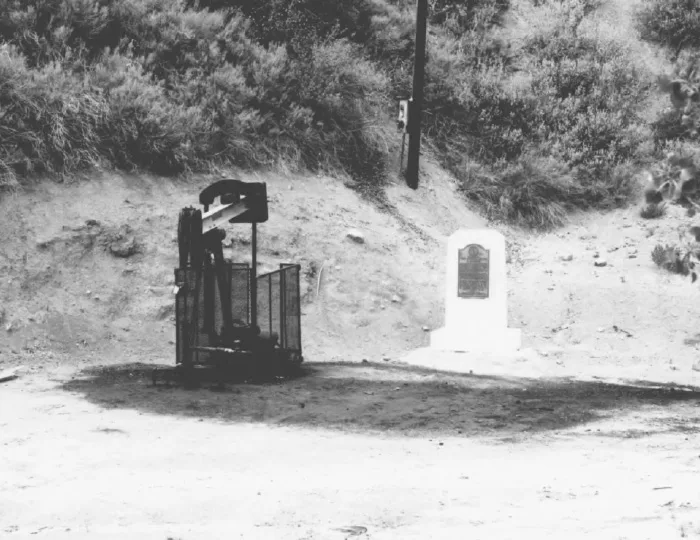

Why it's listed
Pico Canyon, in the Santa Susana Mountains north of San Fernando, holds the well where California's commercial oil industry took hold. Well No. 4, drilled by C. A. Mentry for the California Star Oil Works Company, began in July 1876 and flowed 25 barrels a day at 370 feet. Deepened to 560 feet in November 1877, it sent oil over the top of its 65-foot derrick and settled at about 70 barrels daily, the most striking production the state had yet seen. A two-inch gravity-fed pipeline linked the field to the Newhall refinery in 1879, the first of its kind in California. Union Oil Company also got its start in the canyon in 1884. The roughly 850-acre area also contains the remains of abandoned derricks, an 1880 two-story hotel for oil workers, now a residence, and an 1880 one-story school. The well still yields about a barrel of oil a day. Because of fire danger, the canyon is closed to the general public.
Machine-generated summary. This summary was generated by a language model from the official nomination document and has not been reviewed line by line by an editor. It may contain errors. Check the source document before relying on any detail. Source: nomination document (PDF) · catalog entry. Generated October 2026 (model claude-sonnet-5-5, prompt v1.0-2026-10-29).
| Areas of significance | Industry, Commerce |
|---|---|
| Acreage | 850 |
| Boundary source | NPS cultural-resource GIS polygon |
| Full listing page | Well No. 4, Pico Canyon Oil Field (property record) |
What listing means for this property
This is a historic district. Buildings within its boundary are either contributing (they add to the district's significance) or non-contributing. Owners of contributing income-producing buildings can claim the 20% federal rehabilitation tax credit; homeowners should look at state credits. National Register districts impose no design review by themselves; a local historic district ordinance, if one exists, does (the difference explained).
General information, not legal or tax advice. Rules change; confirm with your State Historic Preservation Office or a qualified adviser.