Wawona Hotel and Pavilion

Why it's listed
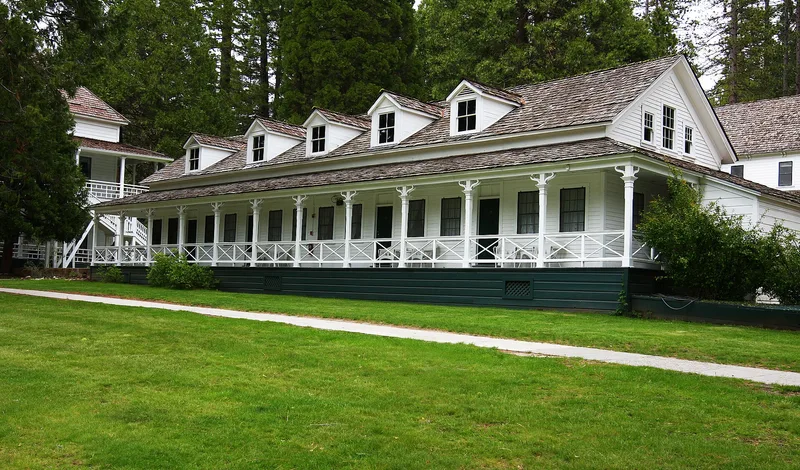
Wawona Hotel is a cluster of eight white and brown wooden buildings in Wawona, near Yosemite, that has served as a resort hotel since the late 1800s. Galen Clark settled the site in 1856, built a bridge over the South Fork of the Merced River and ran a lodging station for visitors to Yosemite Valley and the Mariposa Grove. After his original hotel burned in 1878, the Washburn brothers and their partners built the present complex, beginning with the main hotel in 1879 and adding cottages, an annex and a dormitory through 1920. The Washburns also ran the stagecoach line whose road became part of State Highway 41. The Pavilion served as the summer studio of landscape painter Thomas Hill from 1886 until his death in 1908. Notable guests included presidents Grant, Hayes and Theodore Roosevelt. The complex retains much of its Victorian and Edwardian character and still operates as a summer hotel.
Machine-generated summary. This summary was generated by a language model from the official nomination document and has not been reviewed line by line by an editor. It may contain errors. Check the source document before relying on any detail. Source: nomination document (PDF) · catalog entry. Generated October 2026 (model claude-sonnet-5-5, prompt v1.0-2026-10-29).
| Period of significance | 1856 - present |
|---|---|
| Styles | Victorian/Edwardian |
| Areas of significance | Commerce, Art, Conservation, Transportation, Exploration/Settlement |
| Acreage | 16.5 |
| Boundary source | NPS cultural-resource GIS polygon |
| Full listing page | Wawona Hotel and Pavilion (property record) |
What listing means for this property
This is a historic district. Buildings within its boundary are either contributing (they add to the district's significance) or non-contributing. Owners of contributing income-producing buildings can claim the 20% federal rehabilitation tax credit; homeowners should look at state credits. National Register districts impose no design review by themselves; a local historic district ordinance, if one exists, does (the difference explained).
General information, not legal or tax advice. Rules change; confirm with your State Historic Preservation Office or a qualified adviser.